GCSEs, known as General Certificate of Secondary Education, are compulsory exams taken in the UK when students complete their high school education. Outside of the UK, IGCSEs or International General Certificate of Secondary Education provide the same level of qualification as GCSEs but are available worldwide. Though the key difference is in the word ‘international’, that is not all that separates the two. Take a look at the definitions of each qualification to get a better understanding, given below.
What is GCSE?
GCSE is a standardized qualification in the UK introduced in 1988 to replace O-levels and CSEs. Typically, they are taken by students aged 14 to 16 when they complete high school education. Moreover, there are no age restrictions on the exams or to learn this curriculum.
They aim to assess a student’s knowledge and skills in various academic areas and prepare them for further study, such as A Levels, before going to university. GCSEs are very important for your higher education and career prospects.
Getting a GCSE qualification is a critical component in the academic journey of students. The choice can impact the subjects they can choose for further study, eligibility for getting admissions in specific university programmes, and even their future career. For example, many employers want higher GCSE scores in core subjects like English and Maths tutoring in Dubai as a minimum requirement for job applications and university admission criteria.
What is an IGCSE?
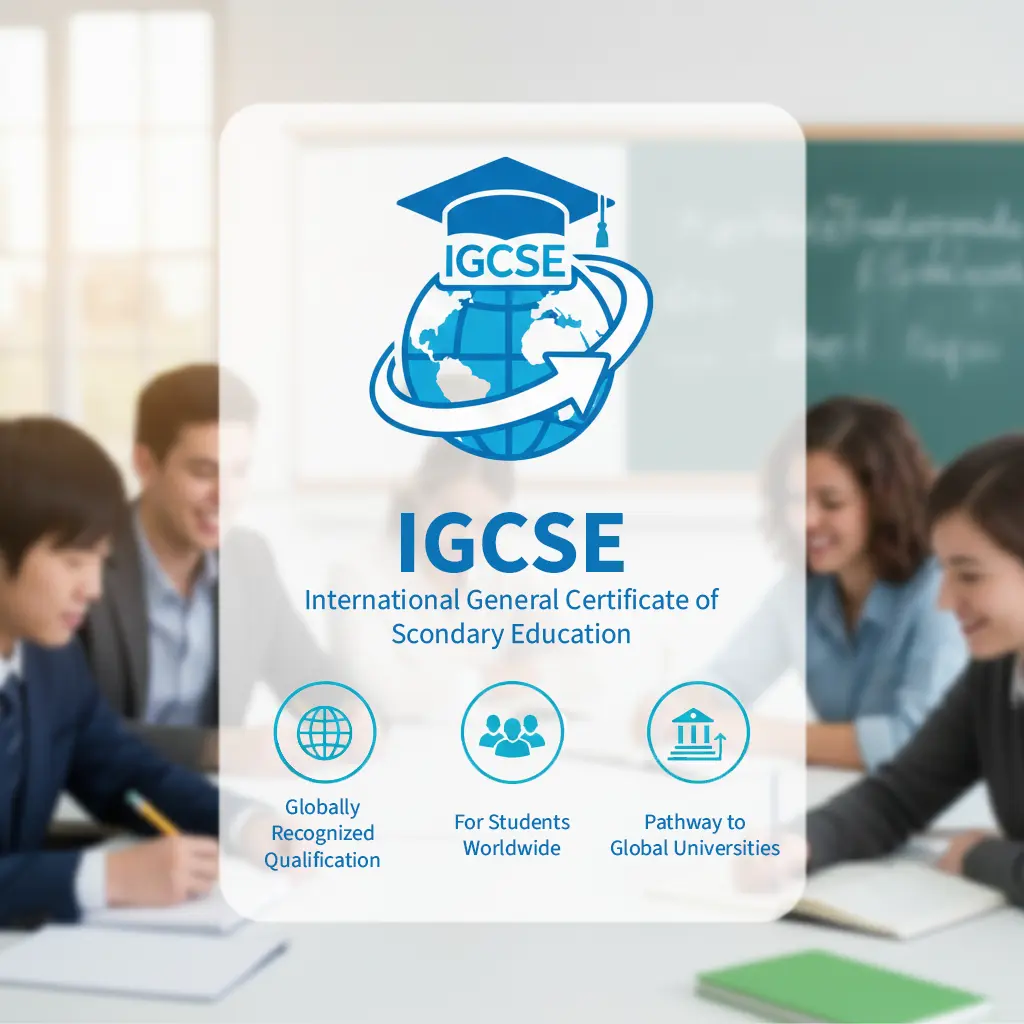
IGCSEs were created by the University of Cambridge International Examinations to provide a more globally recognized qualification for students who live or study abroad. Normal GCSEs are only offered in the UK and some other countries, such as Canada, Australia, and India. Whereas IGCSE cover a much wider range of countries. They are also highly regarded by colleges and universities.
The IGCSE was first introduced in 1988 with a focus on an international audience. It was developed two years after the GCSE. For this reason, it provides subjects with wider global relevance. IGCSE is offered at international and private schools primarily. However, GCSEs are the standard in schools in the UK.
Just like GCSE, IGCSE is a highly recognized qualification. It opens doors to a range of academic opportunities throughout the world. Many universities, including ones in the UK, consider IGCSE scores when analyzing applicants for undergraduate programmes. Good IGCSE results can improve your chances of admission to top universities.
What are the differences between IGCSE and GCSE?
IGCSEs and GCSEs have many more differences than just the countries they are available. Here, we will discuss the top differences to help you decide which one is right for you.
IGCSE vs GCSE Course Content
One of the biggest differences between IGCSEs and GCSEs is the choice of subjects. Both cover the compulsory core subjects of English tutoring in dubai, Maths tutoring, and Combined Science tutoring, but their optional exams are quite varied.
GCSEs are slightly more limited, covering subjects such as History and Geography. In contrast, IGCSEs go beyond a UK-based curriculum to provide courses such as Economics and Computer Science. However, this is all dependent on the school and the options it provides.
Even when both qualifications cover the same subject, the course content can also be very different. That is because GCSEs will have topics more relevant to UK-based students, whereas IGCSEs may be more generic.
IGCSE vs GCSE Exam Dates
The date for both exams can also vary between the two. GCSEs have a set date, with everyone in the UK taking them at the same time between May and June. These are typically held in school halls, with the exception of private or homeschooled students who may go to an examination centre. IGCSEs are mainly the same, except some exams can be taken in November or January for certain subjects.
IGCSE vs GCSE Availability by Country
GCSEs are primarily offered in the UK, as well as some overseas territories of the British Empire. Whereas IGCSEs are designed for international students and so are available in more countries. This makes IGCSEs a popular choice for students who live or study outside of the UK or for UK residents who want to study abroad. UK-based students can take IGCSEs, but they are usually only offered in private schools.
IGCSE vs GCSE System of Grading
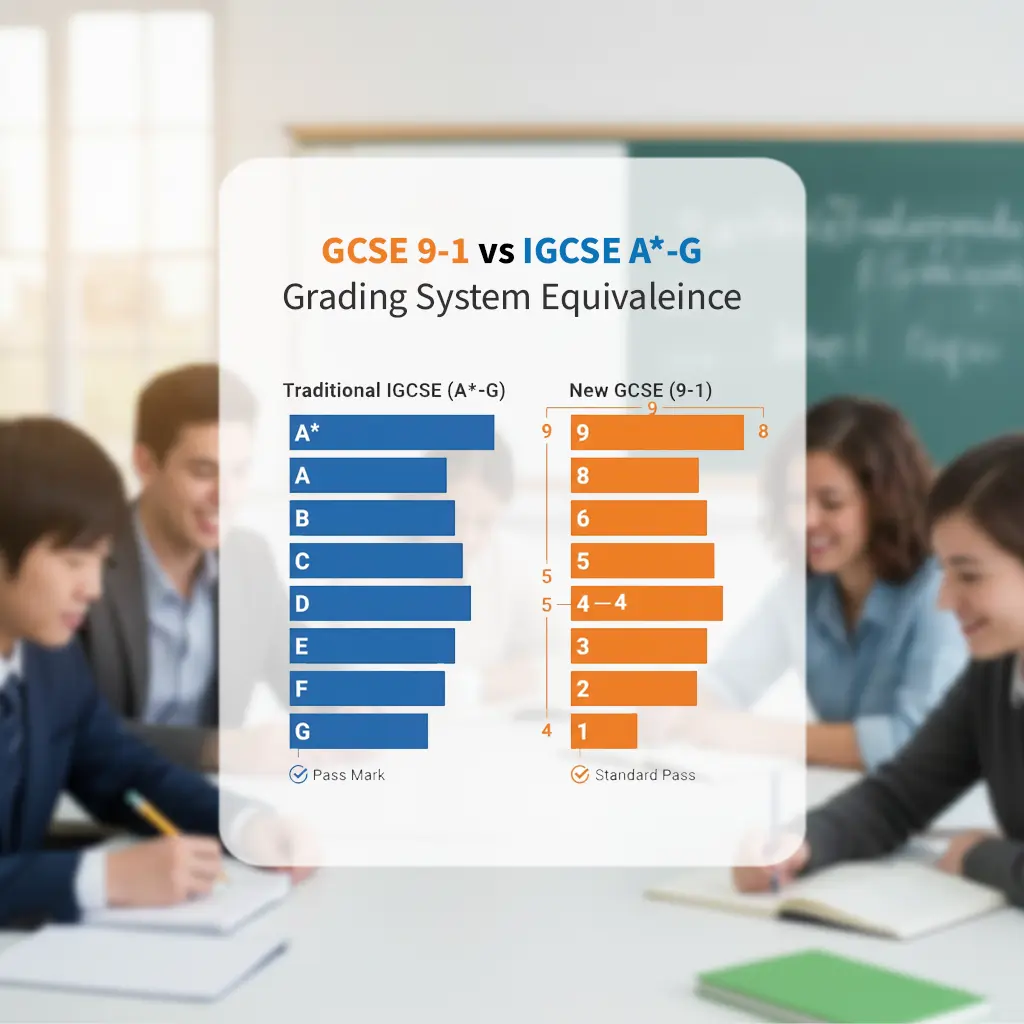
In recent years, GCSEs changed their grading systems from letter to numerical. This is marked from 9 to 1, with 9 being the highest. On the other hand, many IGCSEs still have the letter system from A* to G, with A* being the highest. However, some schools and exam boards in England have now started using the 9 to 1 grading system for IGCSEs.
For comparison, a pass level at GCSE is a 4, whereas in IGCSE it is a C. In GCSE, grades like 7, 8, or 9 are equivalent to an A or A* in IGCSE. Universities recognize both grading systems, and many require a minimum grade for admission.
IGCSE vs GCSE Coursework
Typically, GCSEs used to be more coursework-focused than IGCSEs, which have no coursework requirements. However, this has started to shift, and there is not much difference between the two qualifications. Coursework requirements are more dependent on the subject you take rather than the qualification.
So, why not take the first step now? Select your subjects, download the appropriate past papers, and begin your revision plan today.
IGCSE vs GCSE Subjects
Most GCSE students have to choose between 8-10 subjects. How many subjects you should take depends on your learning abilities and future academic goals. Consider taking at least 5 subjects at the absolute minimum. There is a set of mandatory ones for all students, no matter how many subjects you decide to study:
- English Language
- English Literature
- Mathematics
- Science, including Biology, Chemistry, and Physics
In addition, some schools want students to take foundation subjects, such as Computing, Physical Education, and Citizenship. Besides the core and foundation subjects, GCSEs also provide a comprehensive range of options to study. These optional subjects can help you learn about your specific interests and meet the requirements for admission to a university. Some common categories of optional subjects are given below:
- Arts: Art, Music, Drama, and more.
- Technical Subjects: Design and Technology, Electronics, Computer Science, etc.
- Humanities: Geography, Religious Studies, and more.
- Modern Foreign Languages: French, Arabic, German, Spanish, etc.
In contrast, IGCSE has a more flexible approach to subject selection. For example, there are no compulsory subjects in the IGCSE curriculum. However, students have the freedom to select between 5 and 14 subjects from the groups mentioned below:
- Languages
- Humanities and Social Sciences
- Sciences
- Mathematics
- Creative, Technical, and Vocational subjects
In this way, students can create a personalized programme that suits their academic goals. This is beneficial for those who are interested in learning subjects that are not available in a standard curriculum.
IGCSE vs GCSE Exam Boards
Exam boards are organizations that are responsible for establishing and administering the exams. Therefore, the selection of the exam board affects the exam format that includes a written exam paper and coursework, grading system (9-1 or A*-G), and subject options available. In England, there are five recognized GCSE maths tutoring boards:
- AQA
- Pearson Edexcel
- OCR
- CCEA
- WJEC
All these boards are supervised by the Office of Qualifications and Examinations Regulation to maintain quality across the curricula. Cambridge Assessment International Education, or CAIE, is the most well-known exam board when it comes to IGCSE. However, Pearson Pearson Edexcel and Oxford AQA offer IGCSE qualifications that are considered in terms of the quality and value of their exams.
So, why not take the first step now? Select your subjects, download the appropriate past papers, and begin your revision plan today.
How to Choose IGCSE and GCSE Subjects?
Students must focus on some key factors that must be considered when choosing subjects for IGCSE and GCSE. Core GCSE subjects like English Language and English Literature, Mathematics, and Science are for all students at state schools in the UK. In the IGCSE physics tutoring programme, there are no compulsory subjects, but your school may require you to take the same set of English, Maths, and Science. So, for core subjects, you do not have much of a choice of what to study.
You have the freedom to make your own study programme beyond the core subjects. That is because both GCSE and IGCSE provide a range of subjects in different fields:
- AQA
- Pearson Edexcel
- OCR
- CCEA
- WJEC
All these boards are supervised by the Office of Qualifications and Examinations Regulation to maintain quality across the curricula. Cambridge Assessment International Education, or CAIE, is the most well-known exam board when it comes to IGCSE. However, Pearson Pearson Edexcel and Oxford AQA offer IGCSE qualifications that are considered in terms of the quality and value of their exams.
So, why not take the first step now? Select your subjects like maths tutoring, physics tutoring in dubai, download the appropriate past papers, and begin your revision plan today.
Is IGCSE or GCSE Better for Your Child?

The decision of choosing between IGCSE and GCSE has a great impact on a student’s academic journey. Since both qualifications provide a strong foundation for higher education, keep in mind that they serve unique needs and aspirations.
Reasons to Choose IGCSE
If you live outside the UK, IGCSE is the natural choice for students due to these reasons:
- The qualification is the best option for international students who want to pursue higher education or careers abroad.
- Another advantage of IGCSE is the broad range of subjects that students can choose from.
- With the combination of traditional subjects, you can find unique alternatives such as Accounting or Business Studies.
- Moreover, students can access both core and vocational options. They allow for making a more customized learning experience, considering these diverse interests.
- There is no coursework in IGCSE, and this approach suits students who are more comfortable with an exam-focused assessment.
Reasons to Choose GCSE
GCSE, in comparison, has many benefits that are given below:
- The curriculum is available in private and state schools in the UK.
- GCSE is a better option for students who are planning to stay in the UK for higher education. This is because the curriculum is designed for the UK qualification, ensuring comprehensive coverage of subjects.
- GCSE has a smaller range of subjects when compared to IGCSE subjects tutoring. This restricts options, especially for those with specific academic interests.
Ultimately, the decision should focus on the student’s educational interests, future goals, such as studying in the UK vs internationally, learning styles, as well as practical considerations like subject options. It is best to consult advisors in the schools you are considering to decide what is best for your specific situation.
Bottom Line:
Choosing between IGCSEs vs GCSEs is not a decision that works for everyone. What is good for you may not be the best choice for someone. Ultimately, the ideal path depends on your academic goals, preferred learning skills, and aspirations for your future career. If you want to study abroad and globally, IGCSE might be a perfect fit for you due to the wider range of subjects and global recognition. Besides the career path you choose, having a sound understanding of the differences is key to success. Mixt Academy provide online tutoring, help you approach your higher educational journey with confidence. Our expert IGCSE and GCSE tutors will provide the necessary support to help you achieve your full potential, from customized learning plans to one-on-one online lessons.