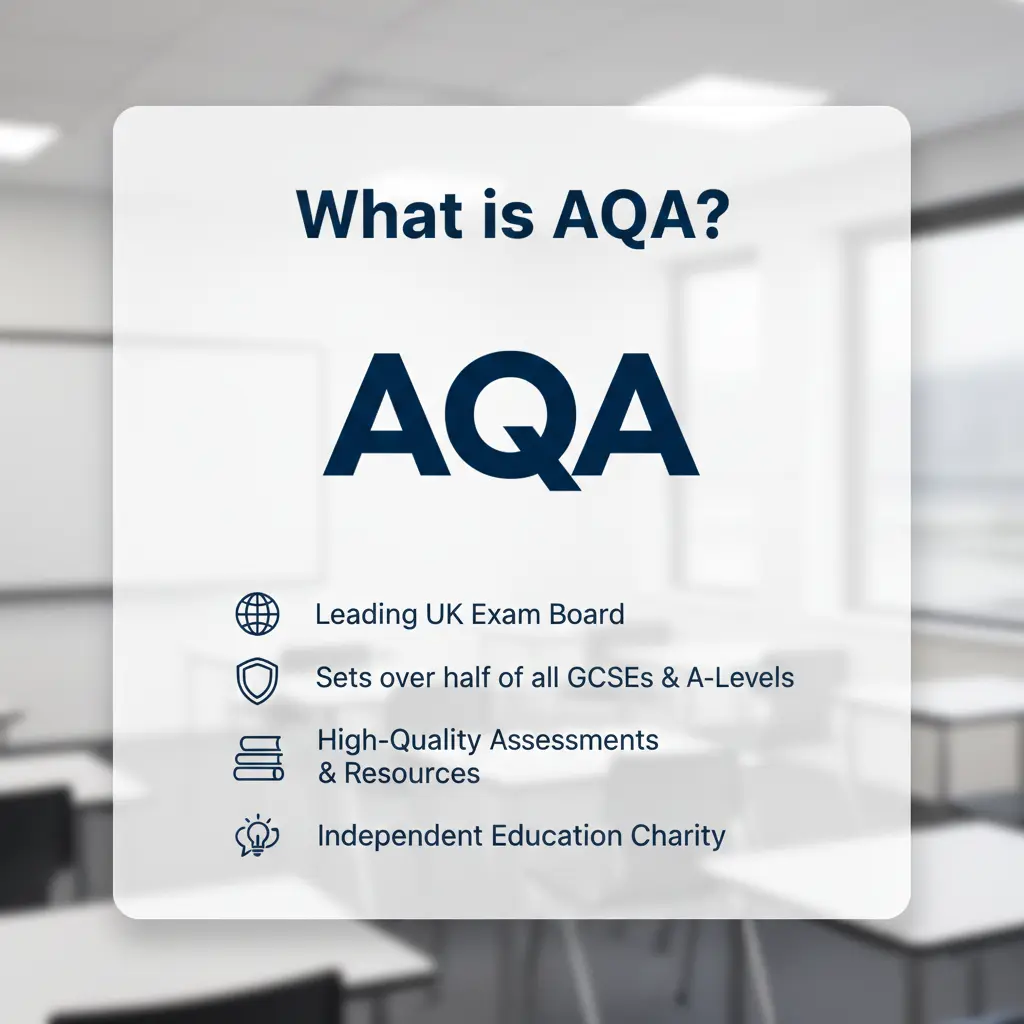
AQA, also known as the Assessment and Qualifications Alliance, is the leading and one of the largest exam boards in England. A total of 92% of UK schools take AQA qualifications, and 1+ million students sat their qualifications last year, as per the data available on the official AQA website.
It sets and marks over half of all GCSEs and A-levels taken in the UK every year. AQA focuses on delivering high-quality assessments and resources to support student learning. An independent education charity, AQA reinvests its income into charitable activities and research to help young people achieve their potential.
AQSA offers an extensive range of subjects, with syllabuses designed to be clear and accessible to students of all skills. AQA places a strong focus on the practical application of knowledge. This is particularly clear in subjects like science, where practical work is combined into the curriculum, and assessments evaluate students’ ability to apply scientific principles.
When did AQA start?
The history of AQA dates back to 1903 when the universities of the UK established the Joint Matriculation Board (JMB) and became public exam providers.
Then, the Associated Examining Board (AEB) was created in 1953. It was designed to provide the new General Certificate of Education (GCE) to all secondary schools. Over the years, a series of bodies led to the establishment of the Assessment and Qualifications Alliance (AQA) in 2000.
AQA Assessment Style
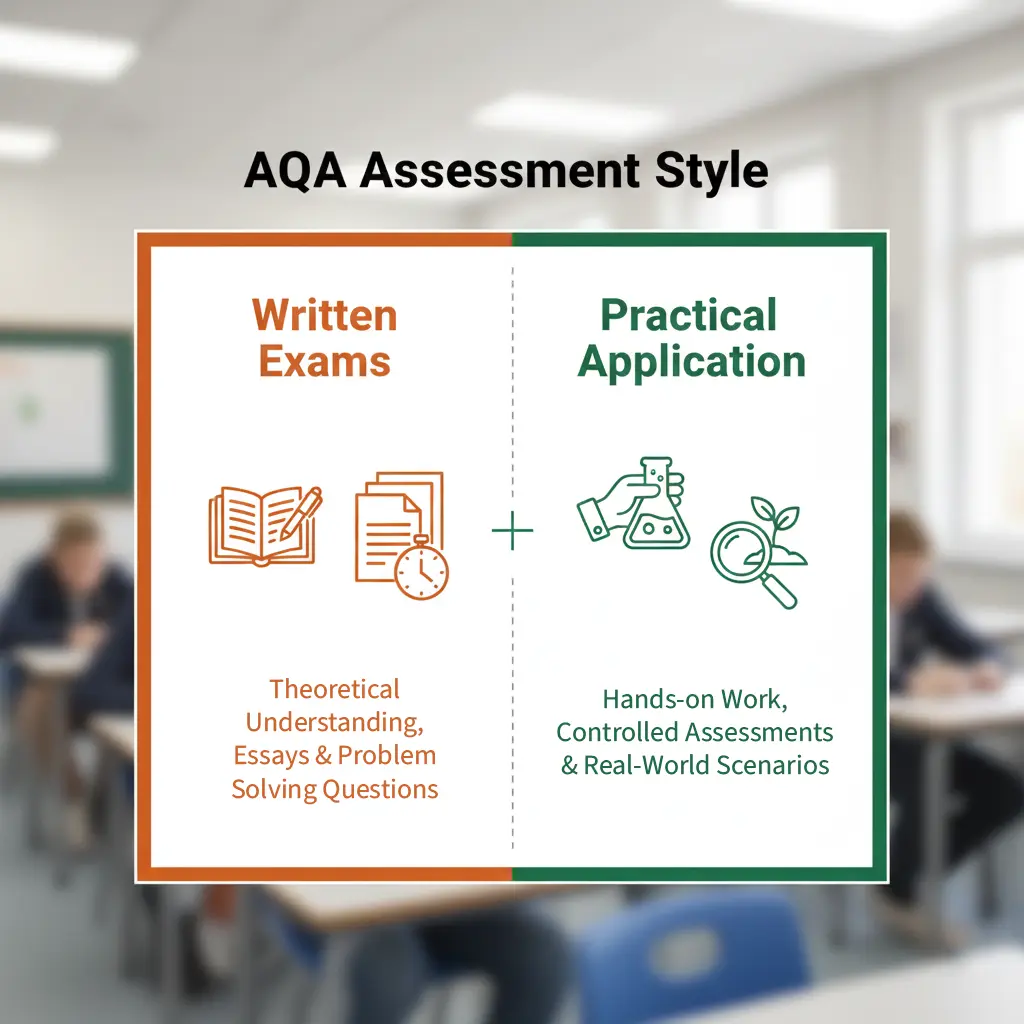
Most assessments in AQA exams are written exams. However, there are some subjects (like those related to art or practical sciences) that include practical elements or controlled assessments. AQA aims to maintain a balance between theoretical understanding of concepts and their application in real-world settings. However, it does combine this with practical assessments in some subjects where applicable, for example, in arts or practical sciences.
Differences between AQA with UK Exam Boards
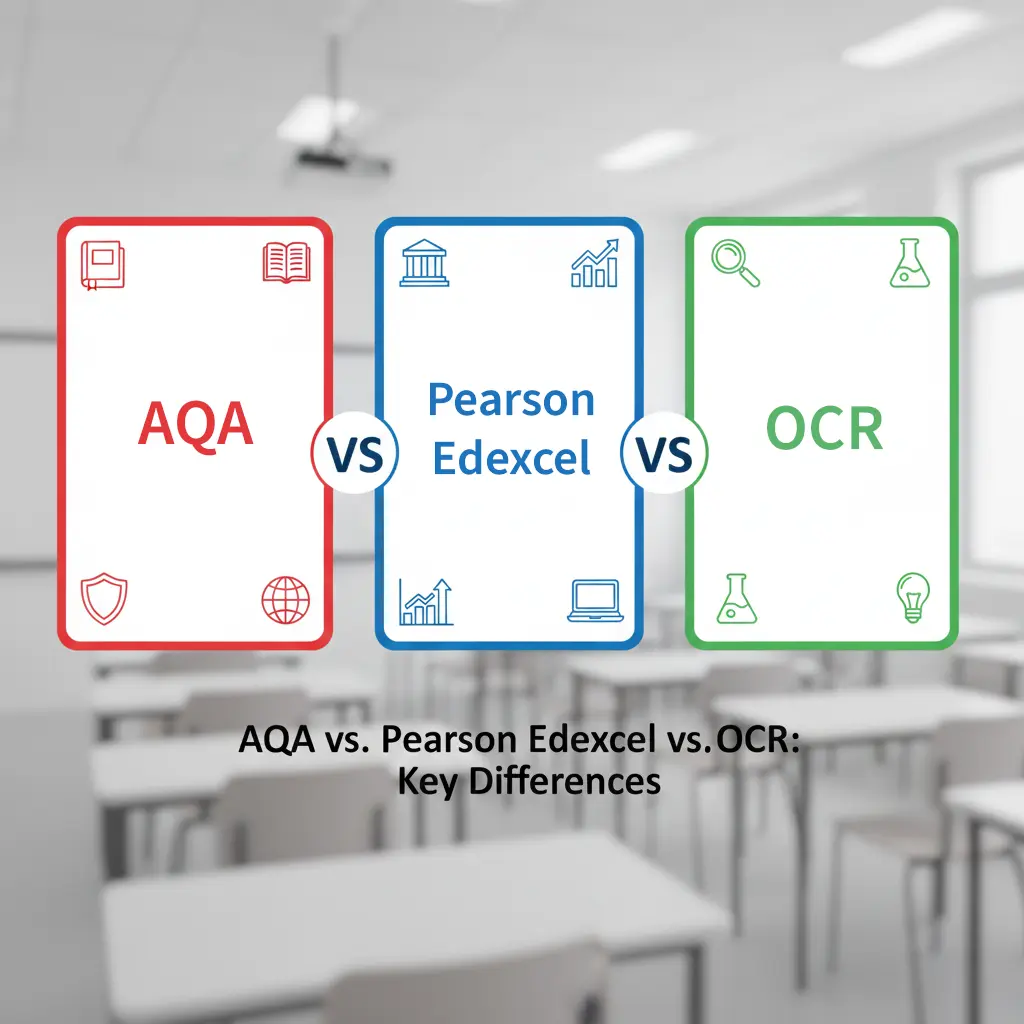
Many schools choose AQA because of its detailed and clear specifications. AQA has a comprehensive range of support materials which are freely available to students and anyone supporting learners with their revision.
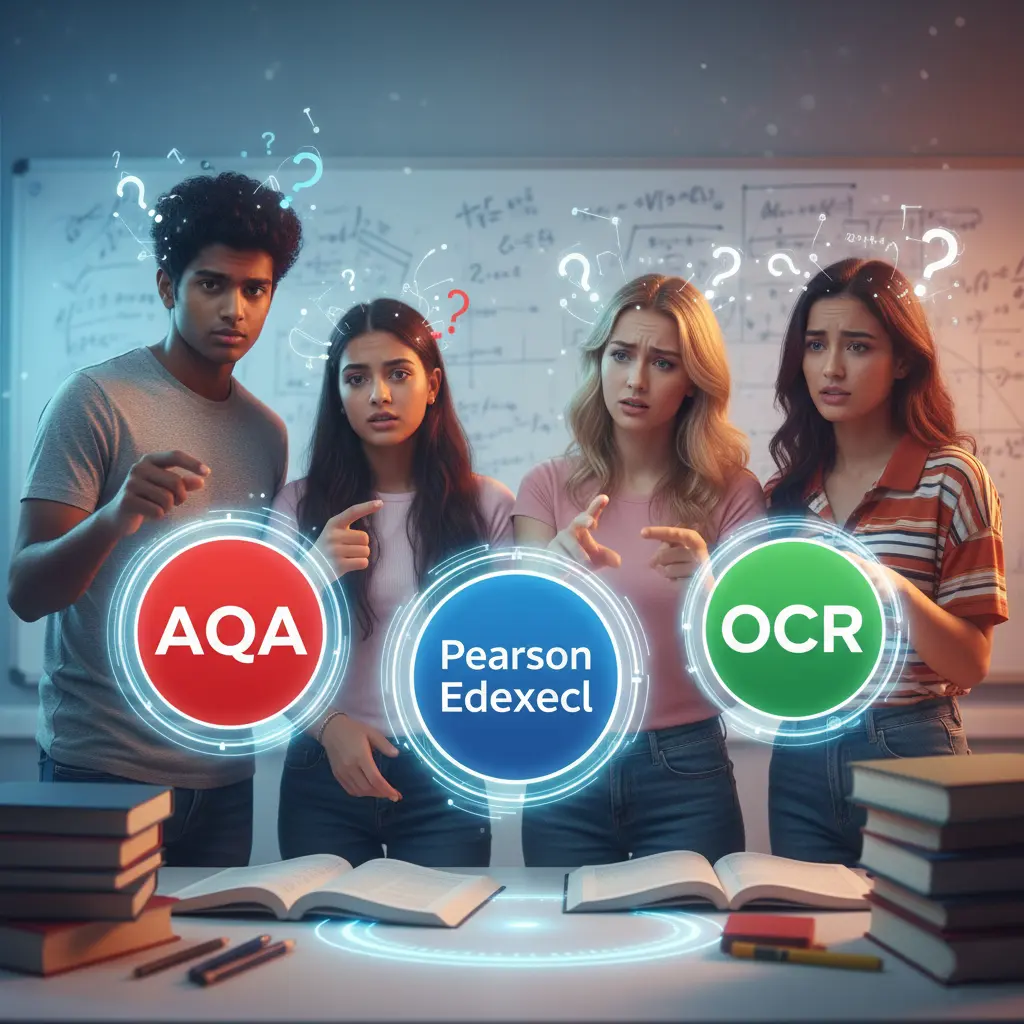
AQA vs OCR
AQA focuses on the practical application of knowledge. Therefore, if you are thinking about which exam board is best for science, i.e., AQA. Practical assessments are included in the curriculum, while assessments examine students’ skills to use scientific principles or mathematical concepts in real-world contexts.
It is always worth looking at the approach to specific subjects, as there are chances where OCR offers options that AQA does not cover. For example, the OCR History GCSE allows students to learn the history of their local area, not just global events. AQA allows a more thematic approach to its History syllabus.
Scope of AQA Board Every Student and UK Parent Should Know
AQA is the largest exam board in the UK, and it sets and marks over half of all GCSE and A-level exams annually. It creates, assesses, and awards a wide variety of qualifications for schools and colleges across the country. AQA also supports international students through its partner organisation, Oxford AQA, which offers globally recognised qualifications based on UK standards.
Pearson Pearson Edexcel vs AQA
Pearson Pearson Edexcel and AQA are both prominent exam boards with extensive resources. Therefore, both offer plenty of clarity and support materials to help with study.
AQA is often regarded as the best fit for students who like progressive forms of exams where shorter answers lead to longer extended answer questions, rewarding well-structured writing in English and humanities subjects.
Pearson Pearson Edexcel is seen as more ‘accessible’ and may suit learners who appreciate the simple approach to some answers. Pearson Pearson Edexcel’s global reach makes it suitable for students seeking flexibility and practical pathways, and students outside the UK.
| Feature | AQA | Pearson Edexcel | OCR |
|---|---|---|---|
| Assessment style | Consists of exams with practical components | Structured exams, modular and linear formats, and some coursework | Includes exams with a practical and analytical focus |
| Subject range | Broad, including applied subjects | Extensive, with vocational options | Wide, with focus on critical skills |
| Global reach | Primarily UK-focused | Global (IGCSEs) | UK-focused |
| Support resources | Extensive, freely accessible, user-friendly materials | Comprehensive, structured resources. Online interactive revision and assessment tools. | Comprehensive, with detailed specifications |
| Ideal for | Students seeking clarity and support | Learners desiring structured paths and modular assessments. Students outside the UK | Students aiming for analytical depth |
Subjects Offered in the AQA Exam Board
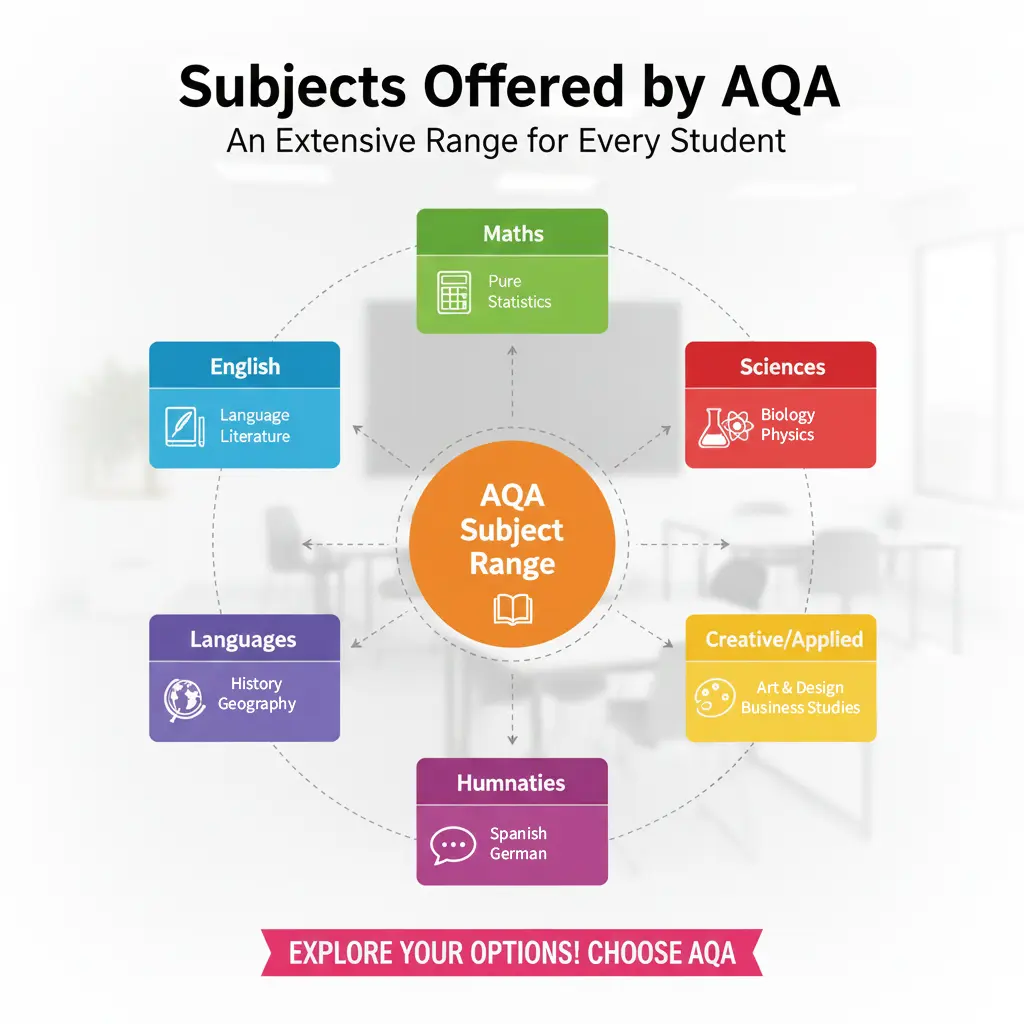
AQA sets and marks more than half of all GCSE and A-level papers. It also offers project qualifications at levels 1,2, and 3, including the Extended Project Qualification (EPQ) that provides an extension to A-level sixth-form studies.
It also offers Applied General Qualifications in business and science aimed at 16- to 19-year-olds, and Entry Level Certificates in core subjects like English, maths and science. AQA offers GCSEs in a wide range of subjects, including:
- English Language and Literature
- Mathematics
- Sciences (Combined and Separate)
- Geography
- History
English Language and Literature
AQA’s English courses place a strong focus on the analytical skills of the students. Students are encouraged to engage critically with both unfamiliar texts and creative writing tasks in the English Language. English Literature focuses on a broader variation of classic and modern topics, with a balance of prose, poetry, and drama. AQA’s assessments include more opportunities for creative interpretation, such as comparative essays, compared to other boards.
Mathematics
The Maths syllabus in AQA is similar to other boards. However, it is known for its straightforward presentation. The subject includes a focus on problem-solving skills and the application of core mathematical concepts to real-world scenarios. Students are assessed on topics like algebra to probability. However, the question styles require logical thinking instead of simple memorization.
Sciences (Combined and Separate)
AQA offers both Combined Science and Separate Sciences. Science courses in AQA are known for their combination of practical skills into written exams, instead of separate coursework. During the course, students complete required practical activities, and their understanding of these practicals is evaluated during the exams.
Geography
In AQA, geography serves as a balance between human and physical geography. Case studies of this subject highlight the global issues like climate change, urbanization, and resource management. AQA’s assessments include practical-based questions, encouraging students to apply real-world observations to theoretical concepts.
History
AQA’s History syllabus covers multiple time periods, from medieval to modern. Students can study topics such as the Cold War and the development of UK democracy. This approach of AQA provides more thematic options compared to other boards, allowing schools to design content to their strengths.
How to Do Well in the AQA Exam Board?
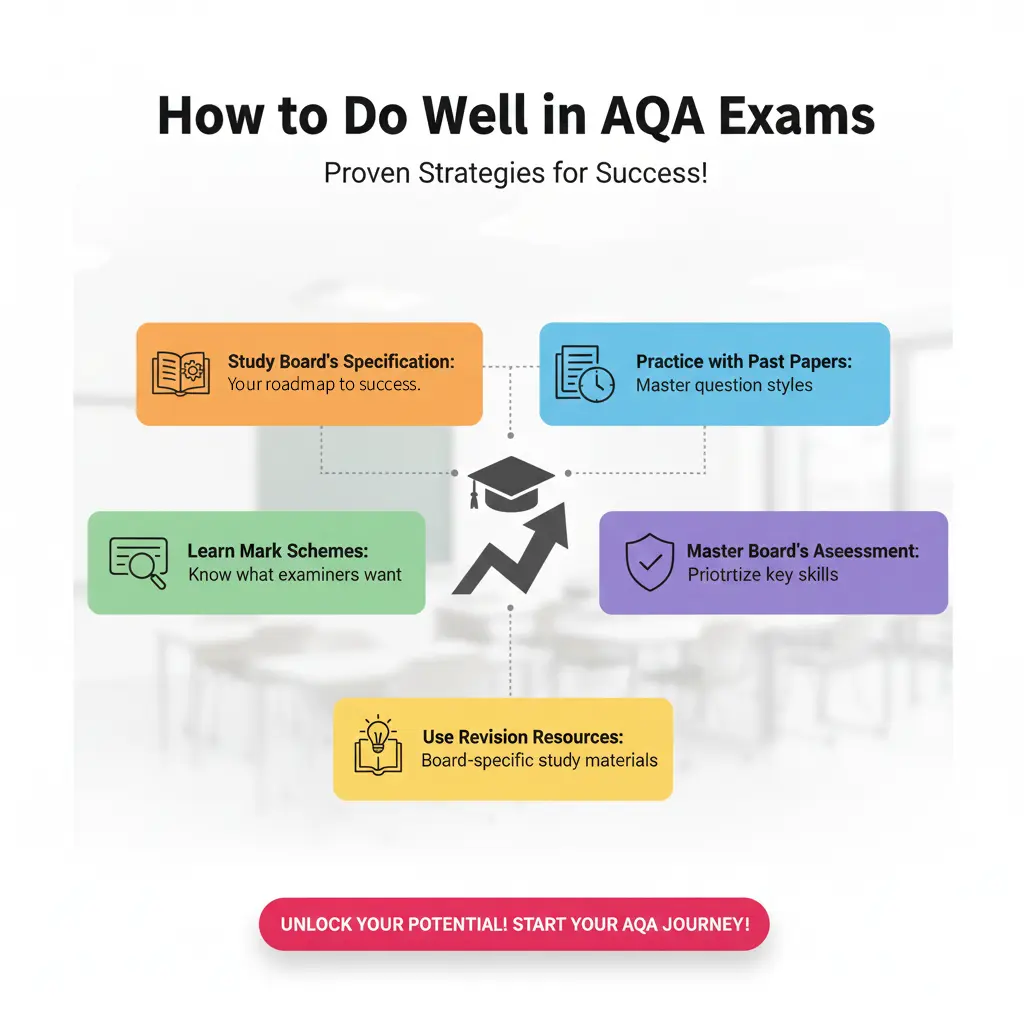
Instead of worrying about which board is easiest, focus on these proven strategies:
Study Board’s Specification
Every board publishes detailed specifications explaining exactly what you need to know. These documents are your roadmap to success. You can compare different specifications in the AQA exam specifications section
Practice with Past Papers
Practice using AQA past papers is essential. General revision may miss the important points that separate grades at your specific board. Each board has its own question styles and mark scheme language.
Learn Mark Scheme
Understanding exactly what examiners look for when they award marks serves as a cheat code. Therefore, it is advised to spend time reading mark schemes alongside past papers.
Master Board’s Assessment
Assessments are the skills each board specifically prioritizes. Some focus more on knowledge recall, others on analysis and evaluation. Know which skills the AQA board values most.
Use Revision Resources
Make sure your study materials are designed specifically for the AQA exam board. Board-specific resources will help you understand exactly what examiners expect.
Bottom Line:
Choosing the right GCSE exam board can impact a student’s learning experience. Keep in mind that all boards follow the same national curriculum standards, ensuring uniformity and fairness in the qualifications awarded. If you are studying AQA, understanding your exam board’s strengths can help you succeed. Students who want top online tutoring services should contact Mixt Academy to get expert AQA tuition designed to meet the requirements of each exam board. Our experienced tutors provide one-to-one support to ensure that learners are prepared for their specific syllabus and upcoming assessments. With our online tuition, students can navigate the challenges of AQA exams with confidence and gain their best possible results.