
Confused About A Level Physics Papers?
Want friendly tutoring that helps you build a strong understanding of A Level Physics? You can easily understand A Level Physics with the help of Mixt Academy’s online tutors.
What Makes A Level Physics Syllabus a Hard Nut to Crack for Most Students?

A-Level Physics is such a complex subject for schoolers because of the severe transition from GCSE, which means gaining a full-fledged conceptual understanding. Mastering the problem-solving skills and the whole mathematical applications (algebra, trigonometry, etc).
In general, they are struggling with abstract ideas like fields and quantum mechanics and, at the same time, encountering complicated, multi-topic questions that require not only an integrated knowledge of the subject and sound reasoning that is even beyond the memorisation of formulas but also the ability to communicate it effectively.
The topics are so interconnected that the student must always be in touch with the learning process, and particularly exam practice is also an indispensable factor, adding to the challenge. Besides being theoretically good at data analysis, one needs to be practically good at it too.
1. Big Step Up from GCSE
The shift from GCSE to A Level Physics is so different that the content is more detailed, the speed is quicker, and self-study is an absolute requirement. The focus is on problem-solving, derivations, and unfamiliar questions, along with a minimum of 12 practicals, which include data analysis, uncertainties, and equipment.
2. Heavy Problem-solving
Applying knowledge to unfamiliar situations accounts for about 60–70% of the A Level Physics examination marks. Just memorising facts is not going to be enough; the students will have to use a mix of equations, logic, and multi-step reasoning.
3. Abstract Concepts
Electric fields, wave behaviour, and quantum physics are among the most difficult to learn since they are purely theoretical. Research indicates that these topics score the lowest in students’ assessments due to their nature of being hard to understand and requiring a strong understanding of concepts.
4. Linking Theory to Real Situations
Real-world contexts (medical imaging or engineering, for example) frequently provide the setting for many exam questions. Students often miss points because they do not clarify how the A Level physics formulas apply to the actual situations of the trials.
5. Exam Technique
A clear structure and proper use of symbols, units, and written explanations are all critical. Examiners say that poor examination technique can take away 10-20% of marks even when the understanding is there.
6. Time and Practice Required
Generally, students at the top end will do a minimum of several hours of independent study per week. The more you practise, the faster you will solve the problems, and the more accurate and confident you will be.
With the proper instruction, continuous practice, and support, A-Level Physics will be a lot easier and more manageable.
So, what are you waiting for? Book your demo class today with Mixt Academy online tutors and receive professional assistance in your physics studies.
How We Simplified the A Level Physics Syllabus?
Simplifying the A Level Physics syllabus for this year requires a shift away from broad memorisation toward focused mastery of key concepts and examiner expectations. By studying with intent and structure, the large volume of content can be broken down into manageable, high-impact sections. The strategies below are particularly effective:
1. Specification-Led Note-Taking
- The One-Page Rule: Condense each major topic (such as Simple Harmonic Motion or Forces) onto a single A4 page. This encourages prioritisation of essential equations, definitions, and laws over unnecessary detail.
- Specification Checklist: Download the 2025–2027 syllabus from your exam board (e.g., CIE 9702 or AQA 7408) and use it as a checklist. Ensure your notes cover exactly what is required—no more, no less.
- Traffic Light Coding: Colour-code the syllabus using green (secure), amber (partial understanding), and red (weak). This allows you to allocate revision time more efficiently.
2. Conceptual Simplification
- Emphasise Derivations: Instead of memorising multiple equation forms, learn how they are derived from first principles. This reduces cognitive load and improves performance in unfamiliar application questions.
- Visual Organisation: Use diagrams and concept maps to show relationships between physical quantities. Visualising systems such as multi-loop circuits or mechanics setups simplifies complex problem-solving.
- Mnemonic Techniques: Apply acronyms, images, or memory hooks for recurring ideas, including rules (e.g., Fleming’s rules) and SI prefixes (T, G, M, k, c, m, μ, n, p, f).
3. Practical and Mathematical Efficiency
- Proportional Reasoning: Recognising patterns, such as understanding that doubling current quadruples power, can save significant time compared to recalculating from scratch.
- Graph Skills: Data interpretation remains heavily weighted in 2026 exams. Practise identifying trends, anomalies, and relationships, and quickly expressing them in the form y = mx + c.
- Unit Conversion Fluency: Compile a short reference sheet for common conversions (e.g., joules to electronvolts, kWh). Automating these steps reduces avoidable errors.
4. Strategic Practice
- Mark-Scheme-First Approach: Use mark schemes early in revision to understand precisely how examiners award marks, especially for extended-response questions.
- Active Teaching: Explaining concepts to others is one of the most effective ways to reinforce understanding and expose weaknesses.
- Targeted Practice: Use platforms such as Mixt Academy or other reputable online tutoring resources to practise topic-specific questions, ensuring mastery before progressing.
How does A-Level Physics Compare with Other Subjects from the Past Year?
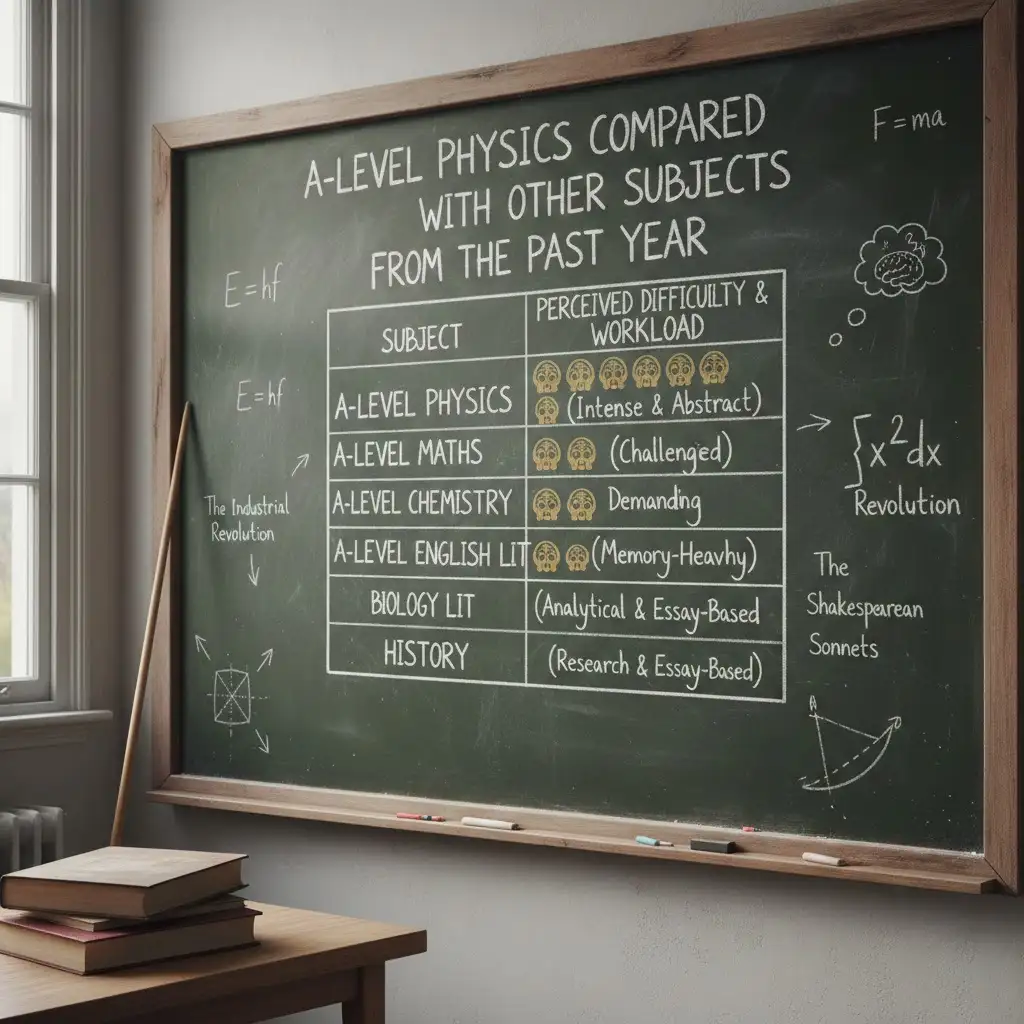
Physics vs Chemistry
Physics and Chemistry are still very close in terms of students’ performance.
- In recent years, over 95% of students in both subjects achieved grade E or above, and approximately 32.10% of candidates gained an A or A* in Physics and in Chemistry, 32.56%, showing almost no difference at the top end of the grade scale.
- Results in the middle of the distribution were also similar, with around one-fifth of students achieving a grade C.
Overall, there is very little to separate Physics and Chemistry when looking at grades. Both subjects are widely regarded as demanding, with heavy content loads and regular exam practice required.
Physics vs Biology
Biology results in 2024 followed a similar overall pattern but differed slightly in top grades.
- The pass rate for Biology was also above 95%, broadly in line with Physics.
- However, fewer students achieved top grades in Biology, with about 27.6% gaining an A or A*, compared with nearly 31.9% in Physics.
- Roughly 21% of Biology students achieved a grade of C, which is slightly higher than in physics.
Biology is seen as more accessible because it involves less maths, but it requires more memorisation, writing, and exam technique, making its workload comparable to physics.
Physics vs Mathematics
Physics and maths are often taken together, and many students report that studying maths alongside physics makes physics easier to manage. Mathematics continues to stand out in terms of high grades.
- Around 96.47% of maths students passed (grade E or above).
- A notably high 41–42% achieved an A or A*, well above the proportion seen in Physics.
- About 15% of candidates received a grade C, slightly lower than in the sciences.
Strong mathematical skills allow students to focus more on understanding physical concepts rather than struggling with calculations.
The Importance of Mathematics in A Level Physics
Core Mathematical Skills in Physics
A strong knowledge of math is essential for success in A Level Physics, as calculations are central to almost every topic.
- Algebra is used constantly, particularly when manipulating equations and solving problems involving multiple variables.
- Trigonometry is frequently applied in areas such as wave behaviour, simple harmonic motion, and breaking forces into components.
- Vectors play a key role in understanding forces, electric and gravitational fields, and momentum.
Guidance for Students Not Studying A Level Maths
While A Level maths is not compulsory for A Level Physics, it is strongly advised to study maths alongside physics makes calculations easier to handle and helps build confidence when tackling exam questions.
If you are not taking A Level Maths, it is essential to:
- Review GCSE-level algebra and trigonometry regularly. Online revision platforms such as Mixt Academy provide functional practice materials.
- Work with classmates who are studying A Level Maths to strengthen your problem-solving skills.
- Seek support from your teacher when encountering A Level–specific mathematical techniques, including logarithms.
Read More: How to Revise for A Level Physics?
How is Maths Tested in Physics Exams?
A Level Physics assessments evaluate mathematical ability as well as understanding of physical concepts.
Exam questions commonly involve:
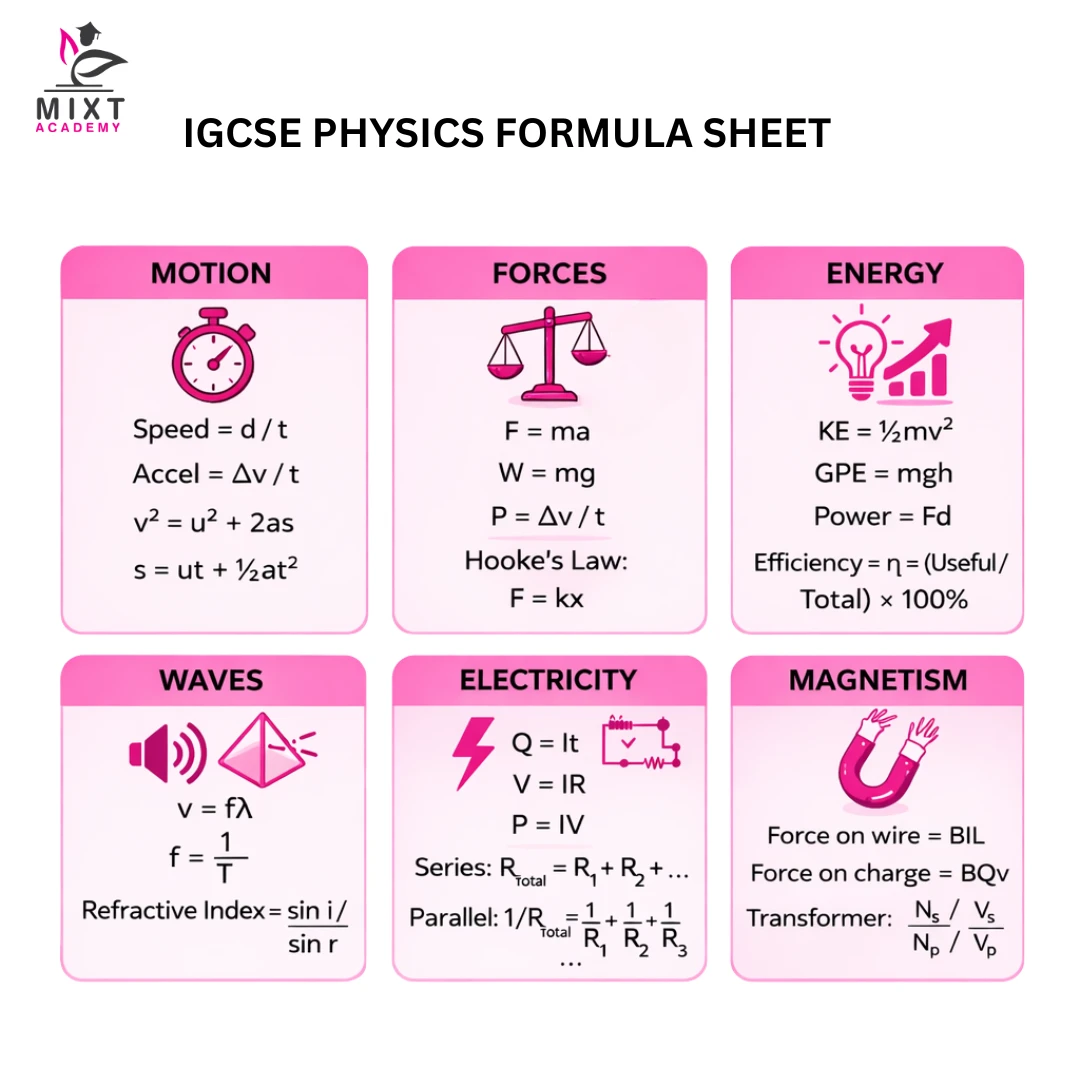
- Manipulating and rearranging detailed A-Level physics equations
- Applying trigonometry to analyse forces
- Interpreting graphs by calculating gradients and areas
- Using logarithmic and exponential relationships
Rather than being taught as a separate element, mathematics is fully integrated into every physics topic, making it a fundamental part of the subject.
Success Rates and Grade Trends in Physics
Looking at recent results helps to give a clearer picture of how demanding A Level Physics grade boundaries really are.
Latest Grade Statistics
In the latest report from recent years, A Level Physics continued to show strong outcomes:
- Around 32% of students achieved an A or A*
- Approximately 19% were awarded a B
- About 18% achieved a C
- Roughly 16% received a D
In total, around 95% of students achieved at least a grade E, which shows that although physics is widely regarded as challenging, the vast majority of students can pass the subject.
Comparison with Other Science Subjects
When compared with other sciences, physics performs well overall.
Students taking physics were more likely to achieve top grades than those studying biology, with biology seeing only around 27–28% achieving A or above.
Physics and chemistry remained very closely matched, with almost identical proportions of students achieving A and A* grades.
This places physics among the stronger-performing science subjects in terms of high-grade outcomes.
Interpreting the Statistics
These figures do not necessarily suggest that physics is an easier subject than biology or chemistry. Instead, they reflect several underlying factors:
- Physics students often have strong mathematical skills, which support problem-solving in exams.
- Those who choose physics are highly motivated and academically confident.
- The calculation-based nature of physics means students can often gain method marks, even if their final answer is incorrect.
Who Might Benefit from Taking A Level Physics?
A Level Physics is challenging, but it can be advantageous for students who enjoy exploring the mechanics of the universe. While it’s not the right fit for everyone, it’s an excellent choice if the following describes you.

Students Who Are Likely to Excel
You may thrive in A Level Physics if you:
- Have a strong aptitude for mathematics and enjoy applying it to practical problems.
- Are naturally curious about how the world works, from forces and motion to electricity and energy.
- Prefer problem-solving and logical reasoning over memorisation.
- Want to keep doors open for STEM-related studies or careers in science, engineering, or technology.
Advantages of Studying Physics
Taking Physics at A Level offers a range of academic and career benefits:
- University Opportunities: Highly respected by universities for degrees in engineering, medicine, chemistry, mathematics, computer science, and other STEM disciplines.
- Career Prospects: Opens doors to diverse fields such as engineering, technology, finance, data analysis, and scientific research.
- Transferable Skills: Develops analytical thinking, logical reasoning, quantitative problem-solving, and modelling abilities—skills that are valuable in nearly any profession.
Suggested Subject Combinations
Pairing Physics with complementary subjects can enhance your A Level profile and future opportunities:
- Physics, Math, Chemistry: Great if you’re thinking about engineering, the sciences, or medical courses.
- Physics, Math, Further Math: Perfect for anyone aiming for theoretical physics, higher-level math, or other advanced STEM subjects.
- Physics, Chemistry, Biology: Keeps all your science options open, but it’s a big workload; be ready to stay organised.
- Physics, Math, Economics: Ideal for students who enjoy numbers and want careers in finance, data, or anything quantitative.
Your Path to Success in Mastering A Level Physics
A Level Physics can seem challenging at first, but with the right approach, it becomes much more manageable. Focus on understanding each concept, practise applying A Level Physics equations and review the course content regularly using structured A Level Physics revision. Breaking the syllabus into smaller sections, working through problems step by step, and using past papers or a guided A Level Physics topics list syllabus, ensures you stay on track.
Remember, consistent effort, asking questions, and seeking help from A Level Physics tutors when needed make even the most complex topics easier. With patience and the right strategy, you can achieve strong grades and gain confidence in every area of A Level Physics.