

Why Learning English Is Important
English is the most spoken language in the world. Knowing English can help you with worldwide communication and is vital for major national and international educational sectors. The following are the core areas where English helps.
- Career & Education: English is the language of international business, tech, science and many other fields. Knowing English can open opportunities for you to work internationally. Besides this, almost every educational institution offers its curriculum in English.
- Communication & Culture: English connects you with people of different cultures and languages. Communicating in English helps you connect internationally.
- Information & Travel: Its is most beneficial when you travel to a new country, whether their native language is Dutch or French, English acts as a communication bridge in these regions.
- Personal Growth: Learning to speak English well is not as difficult as it seems. It just needs consistent practice in your daily routine. Speaking fluent English can also make you confident, and learning new languages can also improve your cognitive skills.
Want to Improve your English for Study, Work, or Travel?
Start with structured lessons designed for beginners.
Useful Tips on How to Learn English Fast as a Beginner

If you are learning English as a beginner, consider the following useful tips.
- Listening Before Speaking
At the beginning, become a good listener because listening carefully will help you speak good English with better pronunciation and accent. Beginners can listen to simple videos, short stories, podcasts, or slow English audio. Using subtitles at first can help; careful listening is key to making progress. - Understanding Simple Sentence Structure
Avoid focusing on complex grammar rules and just focus on simple sentence structure. Knowing the basics first will help you understand more complex English grammar later. - Learning Commonly Used Words
At the beginning of learning English, learn simple, daily-use words rather than complex vocabulary and practice them in everyday life. - Focus on Understanding Meaning
This helps beginners learn English more naturally. Instead of trying to remember complex grammar rules, learners should focus on understanding what words and sentences mean in real situations. - Practice English Every Day
After knowing the basics, practising English every day is one of the fastest ways to improve. Short daily practice is more effective than long, irregular study sessions. Even 10 to 15 minutes a day can make a big difference. Beginners can practice by learning a few new words, speaking simple sentences in daily life, watching short videos in English, or writing a few lines about their day. Daily practice helps build habits and keeps English fresh in your mind. - Speak English Without Fear of Mistakes
Many beginners are afraid to speak English because they worry about making mistakes. This fear can slow down learning. Making mistakes is a natural and important part of learning any language. Every mistake helps you understand what to improve. Instead of aiming for perfect grammar, focus on sharing your message clearly. - Read and Write Simple English Regularly
Reading and writing simple English helps strengthen vocabulary and sentence structure. Beginners should start with short texts such as simple stories, messages, or short articles. Writing does not need to be long or perfect at the beginning. Writing a few sentences each day, such as notes, short descriptions, or daily thoughts, helps learners practice what they have learned.
Use the Right Resources and English Learning Platform
Watching English movies with subtitles, YouTube videos in English audio, using online tools, and a 1-on-1 English Tutor can make a huge difference. Doing beginner courses and learning new words daily can also help you have an extended vocabulary and speak with the right pronunciation more confidently. Beginner-friendly movies such as Finding Nemo, Forrest Gump, The Pursuit of Happyness, Paddington, and The Intern help learners understand real-life conversations, clear accents, and everyday vocabulary.
Need Personalised Help to Learn English Faster?
One-on-one English tutoring, structured lessons, can help you speak confidently and improve faster than learning alone.
Best English Learning Books for Beginners
Choosing the right books can make learning English easier and more enjoyable. For beginners, books that focus on simple language, clear explanations, and practice exercises are most helpful. The goal is not to read long novels at first, but to use books that help build a strong foundation in vocabulary, basic sentences, and everyday English.
Start with books that are designed for English learners. These books often include pictures, short dialogues, and practice questions that help beginners understand and use English in real situations. Look for books that explain grammar in simple ways, show examples you can use in daily life, and offer listening or speaking practice if available. Using books along with listening, speaking, and daily practice creates a balanced learning routine.
30-Day Plan to Learn English Faster
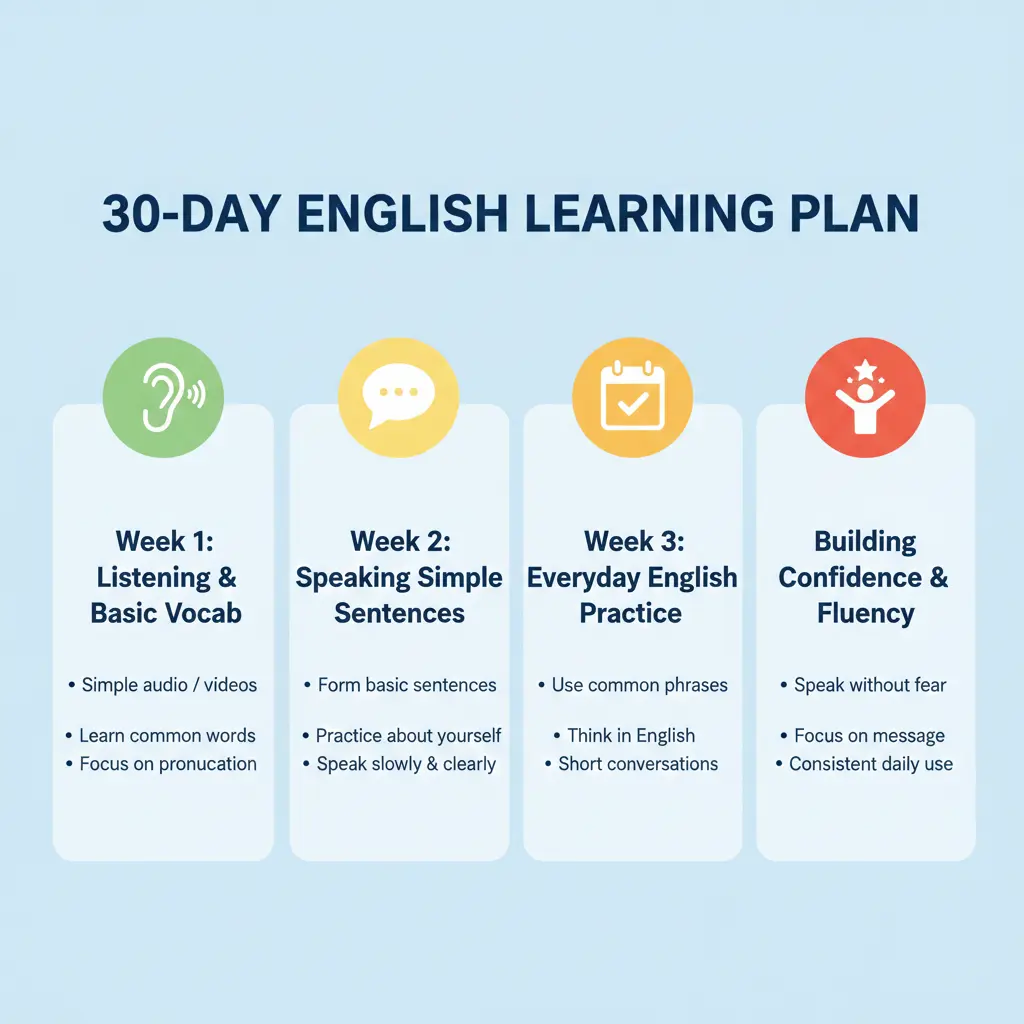
For beginners, plan out your month like:
Week 1: Listening and Basic Vocabulary
Focus on listening and knowing common vocabulary in the first week of learning the English language. Listen to simple English conversations, short videos, or audio clips to get familiar with pronunciation and basic sentence patterns. Learn everyday words that are used in daily life, such as greetings, numbers, and common actions. Do not worry about speaking too much this week. The goal is to understand and recognise English sounds and words.
Week 2: Speaking Simple Sentences
Try to form basic sentences in the second week. Start speaking using simple sentence structures and common words you have learned. Practice short sentences about yourself, your routine, or your surroundings. Speaking slowly and clearly is more important than speaking perfectly. Repeating sentences out loud helps improve pronunciation and confidence.
Week 3: Everyday English Practice
The third week is the time to use common phrases, simple sentences, and short dialogues in your daily life. Practice English during everyday activities such as talking to others, thinking in English, or describing things around you. Use short conversations and simple questions to improve fluency. This stage helps you become more comfortable using English naturally.
Week 4: Building Confidence and Fluency
Now speak with confidence, even if you are making mistakes, and focus on speaking more fluently and confidently. Making mistakes is natural, and it’s a normal part of learning any new language.
Our Top Picks for Learning English
Mixt Academy
Mixt Academy is a leading tutoring platform, providing expert English tutors who help you become a better listener, confident writer and fluent English speaker. They also provide qualified teachers, whether you are looking for an English language tutor or IGCSE, GCSE, AS or A level. Mixt Academy provides one-on-one online tutoring with personalised academic support.
Ready to Speak English with Confidence?
Take the next step with expert English tutors and a personalised learning plan that fits your goals and schedule.
Duolingo
Duolingo is a language learning platform; whether your native language is German or French, seeking an English language course, they provide interactive learning for all. They mainly focus on foundational skills like reading, writing, speaking and listening. Not only for English, but they are also providing expert support for many other languages.
Preply
Preply provides tutors with personalised support, whether you are looking tutor for English Language or for any language/ subject. You are matched with a suitable tutor who gives real-time custom support according to your academic goal.
TED
TED is best known for its powerful short talks. TED allows you to develop your language based on the topics you are interested in. You can use a filter to add any language now, and you can watch videos with subtitles, so that you can read and listen at the same time.
Coursera
It is a global learning platform that partners with top universities and companies to offer high-quality courses, certificates and degrees. Coursera helps with English in a structured, academic, and professional way.
Final Thoughts on How to Learn English with Confidence
Learning English fast as a beginner is not about memorising difficult rules or speaking perfectly from day one. It is about building small habits, practising every day, and using English naturally in your routine. By focusing on listening first, speaking without fear, learning common words, and using the right resources, you can make steady progress without feeling it complicated. Remember, everyone learns at a different pace, and making mistakes is part of the journey. With patience, consistency, and the right support, English can slowly become a language you understand, speak, and use with confidence in daily life.