
Understanding IB Math and Its Structure
There are two levels in the IB Math curriculum: Standard Level (SL) and Higher Level (HL). The course of study includes a lot of different math areas. Learning how the IB Math program is organized and what is required will assist you in optimizing the coursework.
SL is usually best for students who don’t need to know a lot about math for jobs in the future.
HL is best for learners who want to work in areas that require more advanced work, like mathematics, economics, or the field of engineering/science.
In IB SL Math, students at all levels learn about algebraic methods, mathematics, statistics, and geometry. HL students learn more complicated subjects like number systems, equations involving differential equations, and matrices.
Key Strategies for Achieving a Level 7 in IB Math
While getting a Level 7 in IB Math may look hard, it is possible if you have a suitable approach and use proper techniques. Here are some tips that can help you get better at IB Math and earn the best grade possible.

1. Master the Core Concepts
To do well in IB Math, you need to know the basic ideas. Avoid just trying to remember numbers; figure out why they work. You will be able to solve challenging questions faster and better with such strong knowledge, particularly if you have to answer tough questions on exams.
- Algebra: In the algebra course, you should work on knowing formulas and completing equations and variables.
- Calculus: Both SL and HL tests put a lot of importance on the principles of integration and differentiation. Therefore, ensure you practice such concepts regularly.
- Statistics: Learn about probability, how to analyze data, and trends; these are important topics for both levels.
2. Practice Regularly
To learn IB Math, you need to practice it regularly. The more you get used to the test style and the kinds of topics you might see, the more easily you will solve problems. Daily practice is also the most effective way to get better at math without stressing about it.
- Solve past papers: A few of the easiest ways to get ready are to work on past papers. They not only assist you in getting used to the pattern of the test, but they also show you the kinds of questions that are most likely to be asked.
- Take your time: Time yourself while you work on questions to get faster on tests and feel better about your abilities.
3. Utilize the Formula Book Wisely
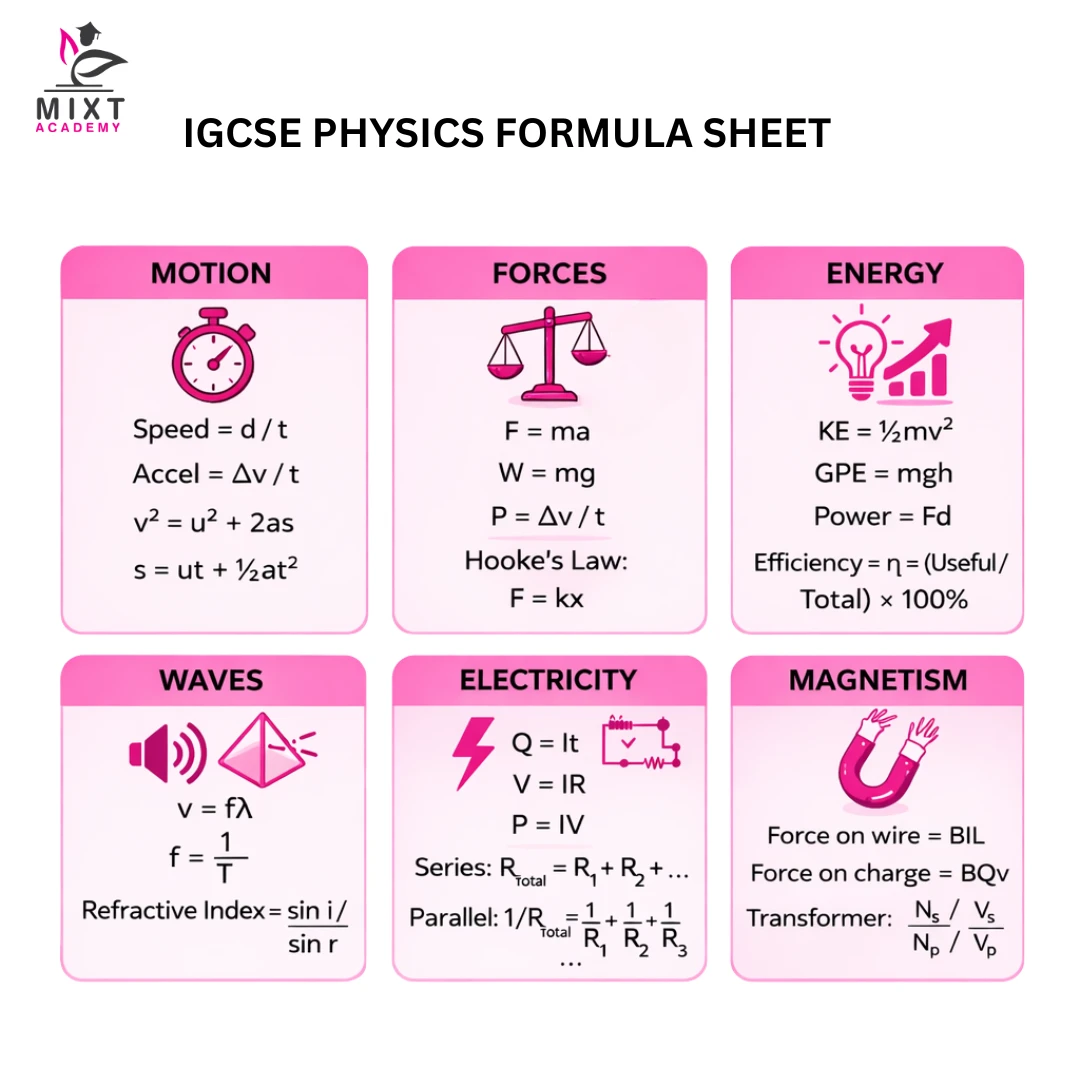
There are important formulas in the IB Math Formula Book for both SL and HL courses. Make an effort to memorize all these formulas. Moreover, it is also essential to know when and how to apply these formulas during the exams.
- Solve past papers: A few of the easiest ways to get ready are to work on past papers. They not only assist you in getting used to the pattern of the test, but they also show you the kinds of questions that are most likely to be asked.
- Take your time: Time yourself while you work on questions to get faster on tests and feel better about your abilities.
4. Organize Your Notes
Taking good notes is an important part of learning for IB Math. Having well-organized, detailed problem-solving notes can help you quickly find information and revise topics in a good way.
- Mind Maps: To see how various mathematical topics are related to each other, use mind maps. This technique is helpful for easily memorizing algebra and angles, etc.
- Formula Sheets: Make a list of important equations, formulas, concepts, and paper-solving ways for quick reference.
5. Target Your Weak Areas
All students have weak areas in specific subjects. Therefore, it is necessary to target these demanding areas and give extra time to deal with them.
- Private lessons: When you are facing difficulty understanding a specific subject, like calculus or math, consider getting professional assistance. Mixt Academy offers one-on-one online lessons to help you learn these topics with confidence.
- Some extra resources: There are some online resources like Khan Academy, Coursera, or IB Math-specific YouTube accounts to get help in understanding tough topics.
6. Study Together
Learning together with other students can help you understand new ways to solve math questions. This is one of the most effective methods to improve your knowledge.
- Group Study: Find a study group to share your weaknesses, strengths, and topic-related materials you need. Group study is the best way to learn from each other and fix challenges quickly.
- Online Communities: Social forums like Reddit and Discord for IB Math boards are good examples that can help students learn in a combined format.
7. Master Time Management
Managing your time during exams is very important for the IB Math curriculum. Being smart about prioritizing the time for each specific question can make a major impact.
Set priorities: Start answering those questions that you are clear and confident about. This will assist you in solving the paper faster and give you some extra time for the harder questions.
Answer the question and move on: Never spend too much time on one question. You can skip a question and return to it later if it takes longer than necessary.
8. Learn the Marking Pattern
In IB maths exams, you will still get marks if you make a mistake while attempting the answer with a perfect pattern and solving technique. So, explain the clear procedure that you follow to answer the question.
- Detailed Answers: Break up major issues into smaller ones. When you are trying to solve an equation involving differential variables. For example, you should show each stage, including the starting hypotheses and the steps in between.
- Writing and units: Make sure you apply the right math symbols and include units when they are needed.
9. Focus on Problem-Solving Techniques
IB Math is more than just remembering formulas; it’s also about finding solutions to different subject-related problems. Focus on getting to the details of every problem so you can answer questions confidently.
- Critical Thinking: Think critically about the best way to deal with a problem and always look at the scenario in question.
- Application: To improve your skill to use ideas, try to connect math problems to situations that happen in real life.
10. Stay Calm and Positive
Even though math stress is true, staying calm during tests and exams can really help you perform better. Think positively and take a deep breath when you feel like you cannot handle anything.
- Stay Positive: Always realize that hard work is going to pay off. Don’t worry about the result; instead, stay positive and pay attention to the whole process.
- Methods for Relaxation: Before tests, do deep breathing or methods of relaxation like prayer to help calm down.
Additional Tips for Achieving a Level 7
Having a Clearly Defined Exam Strategy: More detailed breakdowns of the exam strategy around time management are necessary. Specifically, find the best approach to deal with multiple-choice questions. Also, making a more comprehensive strategy on how to approach the various question types on the IB Math exam will be helpful.
Visual Aids: Having a technique to memorize the answers to different trigonometric questions is a good approach. This method is best suited to students with sharp graphic and visual memory.
More Practical Examples: Ideally, using real-life situations in higher-level math, especially making problem sets related to engineering, economics, and science, will fast-track your learning engagement.
Communities Around IB Math: More precise references to some collaboration tools, like IB-themed FB groups, specific Reddit threads, and other social media networks that are focused on IB Math, will be a great help.
A More Encouraging Tone: Since learning Math can be difficult. Therefore, using a bit of encouragement content like “Ways to Stay Motivated While Doing Your IB Math” could be helpful.
Resources for IB Math Students
There is no shortage of resources to assist you in achieving a Level 7 in IB Math. These materials consist of your class notes and practice sessions performed during the class.
Get the official IB Math textbooks, as they offer detailed explanations and practice exercises.
Khan Academy, resources from Mixt Academy, and Coursera are some examples of online materials that offer free instruction.
Also consider buying IB-specific practice books that include comprehensive answers to help you follow the logic of the problem-solving steps.