
Moral education is a fundamental component of primary and secondary education, instructing students through daily actions and choices to discern between what is right and what is wrong. Contemporarily, schools are interested in the positive values of academic honesty, friendliness, and being responsible. They tend to rule out the negatives of cheating, bullying, and dishonesty in their midst.
Moral education, first of all, rules and discipline, aims at character development, ethical judgment, and social responsibility. Schools, by influencing the think, feel, and act of their students, form the morally conscious ones; the issue of moral education’s purpose and its most effective methods is opened up.
Theories of moral values education offer different perspectives on how moral values can be taught and developed. Let’s explore more about moral education with our online professional tutors.
An online tutoring platform shaping ethical minds through guided learning, values, and academic support.
These different approaches could be intertwined, resulting in a comprehensive moral education program that broadens both intellect and service.
Table of Content
Moral education unfolds in a variety of ways, providing each time a distinct path for supporting the growth of the student’s values, ethical understanding, and behaviour. The main approaches consist of:
The approach is directed to the formation of values and not to the imposition of values. The development of students’ personalities (honesty, kindness, politeness, responsibility) is the slow acquisition through the teacher’s exemplary behavior, evaluation, rewards, and discussions on good conduct.
The method is dependent on psychological theories and offers students moral reasoning and consequences understanding. Additionally, finally no support in making decisions according to their ethical standards after determining their values.
Through this approach, learners are participating in the uncovering of their own belief systems and morals, pondering over their selections. Besides, one eventually gains the power to make informed and responsible choices.
Moral education accentuates observation, the use of good models, and living in real-life situations. So, linking the students to the ethical theories that they already apply in their daily lives is being done.
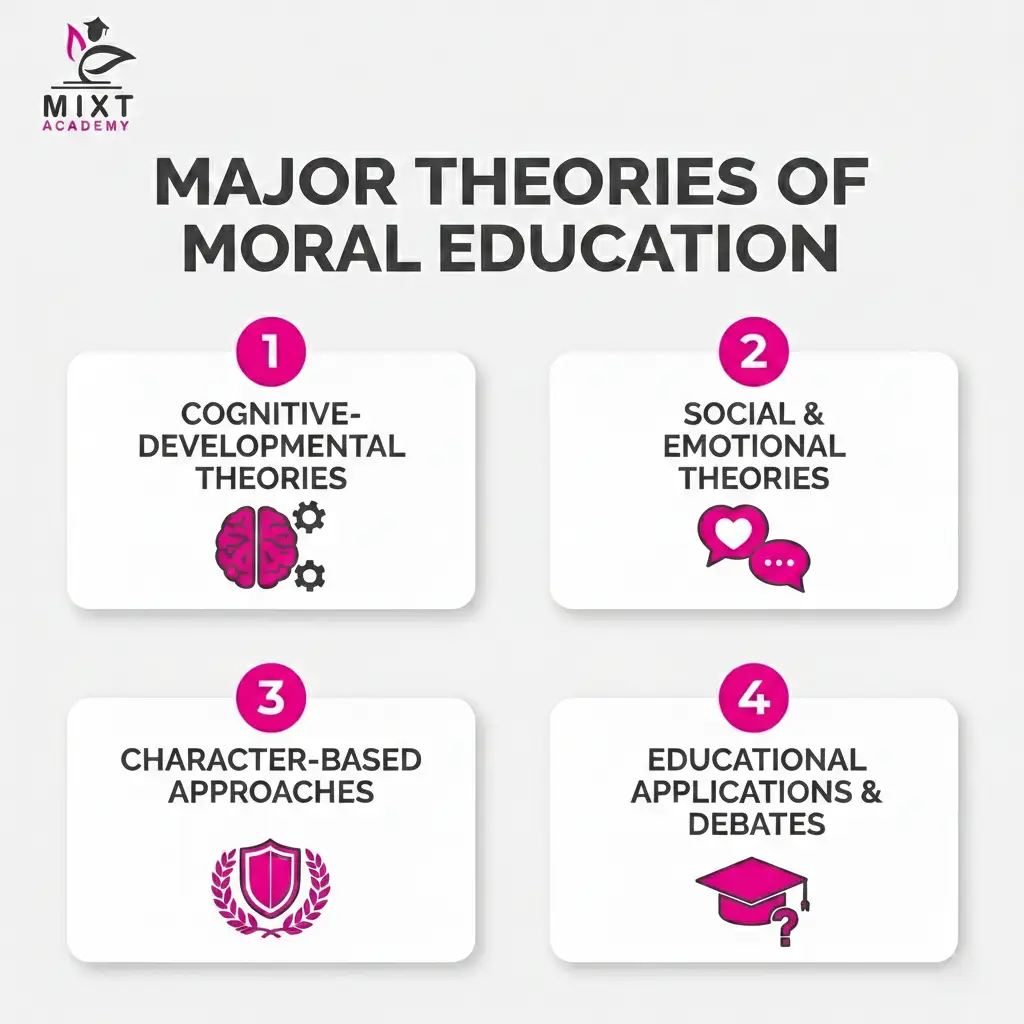
Moral education theories concern themselves with the factors that initiate the development of a child’s moral understanding, values, and behavior. Their core is primarily concerned with cognitive development, social learning, empathy, and character, which eventually lead the learners from mere rule-following to principled moral reasoning.
The main approaches among the cognitive-developmental, social-cognitive, and character-based models are widely debated on whether the issue lies with direct formation or inquiry-based learning.
Jean Piaget put forward the idea that there are two steps in moral understanding. The first one is moral heteronomy, which sees rules as fixed and based on consequences. The second one is moral autonomy, which attributes to intention and fairness, the latter being developed through peer interaction.
Lawrence Kohlberg: Elaborating on Piaget, distinguished three levels and six stages:
Implementing moral ethics in schools comes with several challenges that educators must navigate to be effective.
We are helping students build ethical reasoning, empathy, and responsibility alongside academics.
Successful moral education combines active guidance, practical experiences, and reflective practice to help students develop ethical awareness and responsible behaviour. It encourages modelling positive behaviour, discussing moral dilemmas, integrating ethics across subjects, and fostering empathy through real-world activities, all within a safe and supportive environment.
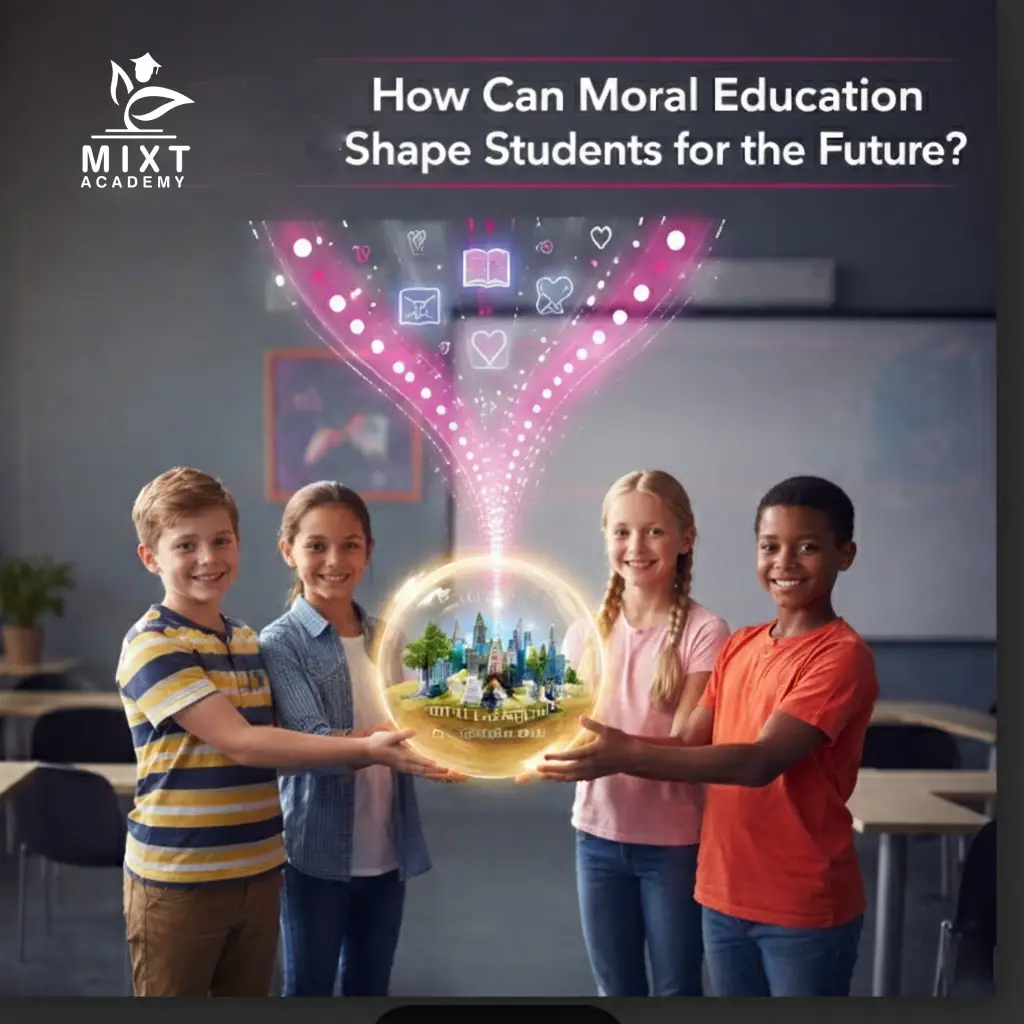
Moral education plays a vital role in shaping students into responsible, empathetic, and ethical individuals. By combining theory, reflection, discussion, and practical experiences, schools can guide learners to understand right from wrong, develop virtues, and make thoughtful decisions. While challenges like diverse beliefs and external influences exist, consistent strategies such as role modeling, storytelling, experiential learning, and curriculum integration make moral development achievable.
Instilling honesty, respect, empathy, and fairness equips students to navigate social complexities and contribute positively to society. Ultimately, fostering moral awareness alongside academic learning ensures that education produces not just knowledgeable but ethically conscious individuals ready to face the world responsibly.
Moral education is the process of teaching students about values, ethics, and principles of right and wrong. It aims to develop character, ethical reasoning, empathy, and responsible behavior in personal, social, and civic life.
In the UAE, moral education is part of the national curriculum, focusing on building ethical awareness, respect, and responsibility among students. It promotes values like tolerance, honesty, empathy, and social responsibility aligned with cultural and global standards.
An example is teaching students the importance of honesty by encouraging them to return lost items or discuss the consequences of cheating and dishonesty in class.
The four pillars of moral education provide a foundation for guiding students toward ethical behavior and responsible decision-making.

Mixt Academy is a global online tutoring platform that connects students with expert IGCSE, GCSE, and A-Level tutors for one-to-one learning. With flexible scheduling, personalized lesson plans, and experienced teachers from top curricula, Mixt Academy helps students strengthen concepts, improve exam skills, and achieve higher grades with confidence.



IGCSE Physics Formula Sheet: Key Formulas for 0625 & Edexcel…
IGCSE Chemistry Papers: Common Mistakes & Exam Tips This IGCSE…
IGCSE Extended vs Core Tiers: How to Pick the Right…
Understanding GCSE Grade Boundaries and How to Prepare? Grade boundaries…
Differences GCSE English Language vs English Literature GCSE English is…
What is GCSE? A Guide for International Students & Parents…
A Level vs AP: Complete Guide to Choosing the Right…
Top Benefits of Completing AS and A Levels Privately Explore…
Cambridge vs IB Guide to Choosing the Best Curriculum Choosing…
IB vs A Levels: Which Qualification Is Right for You?…
How to Use OCR Past Papers for Effective Revision? Past…
AQA Physics Equation Sheet: Complete GCSE Guide for Combined Science…
AQA vs Edexcel Complete GCSE Comparison and Guide Choosing between…
Complete Guide to the AQA GCSE Chemistry Specification Understanding the…
Hire an Expert Tutor from Just 15$/hr