What is the IGCSE Physics Syllabus?
The IGCSE Physics syllabus is a curriculum framework that defines the general concepts, topics, and skills that need to be covered in a specific time period. This prepares students to take summative assessments. Students are provided with a set of instructional materials and are encouraged to use a variety of learning strategies to achieve the goals specified in the syllabus. These include:
- Understanding the laws of physics and being able to explain them.
- The development of thinking and decision-making that leads to the right answer.
- The ability to work in a laboratory.
- Demonstration of the ability to use principles of physics in a practical situation.
The major examination boards offer the following syllabuses:
- Cambridge IGCSE Physics Syllabus
- Edexcel IGCSE Physics Syllabus
Both of these are recognised and accepted by universities and colleges around the world.
Where to Find the IGCSE Physics Syllabus PDF
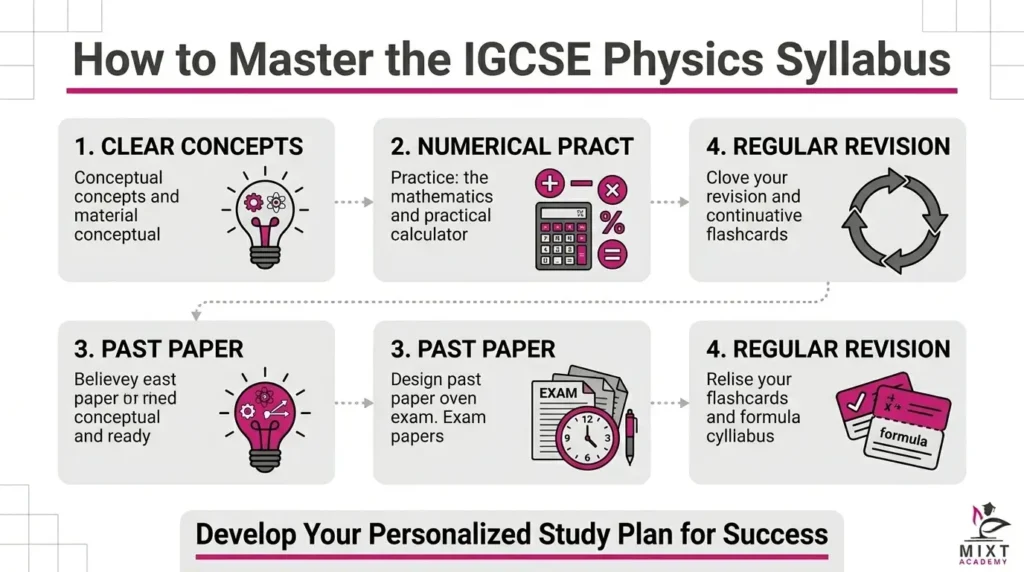
Students need the IGCSE Physics tutoring Syllabus PDF so that they can have the official syllabus. This will help them because it includes:
- Everything they need to study
- The vocabulary they need to understand
- The methods of assessment
- How they will be evaluated
You can also find updated versions, such as:
- The IGCSE Physics Syllabus 2026 PDF
- The IGCSE Physics Syllabus 2027
All of these are official documents that will help answer the questions that you have. This will ensure that you are studying what is required without doing any irrelevant work.
Updates in the IGCSE Physics syllabus 2026 and IGCSE Physics syllabus 2027
The Cambridge IGCSE Physics syllabus 2026 and Cambridge IGCSE Physics syllabus 2027 updates maintain the same format as their previous versions, but include the following changes:
- Further Guidance in Data Use and Analysis
- Increased emphasis on the skills of experimentation and investigation
- Inclusion of space physics in the Cambridge IGCSE syllabus
- Shift toward more application-based questions
The above-listed updates further the current approaches of thinking and ensure that students gain practical and real-world understanding beyond the knowledge of the theory.
Detailed Topic Breakdown of the IGCSE Physics Syllabus
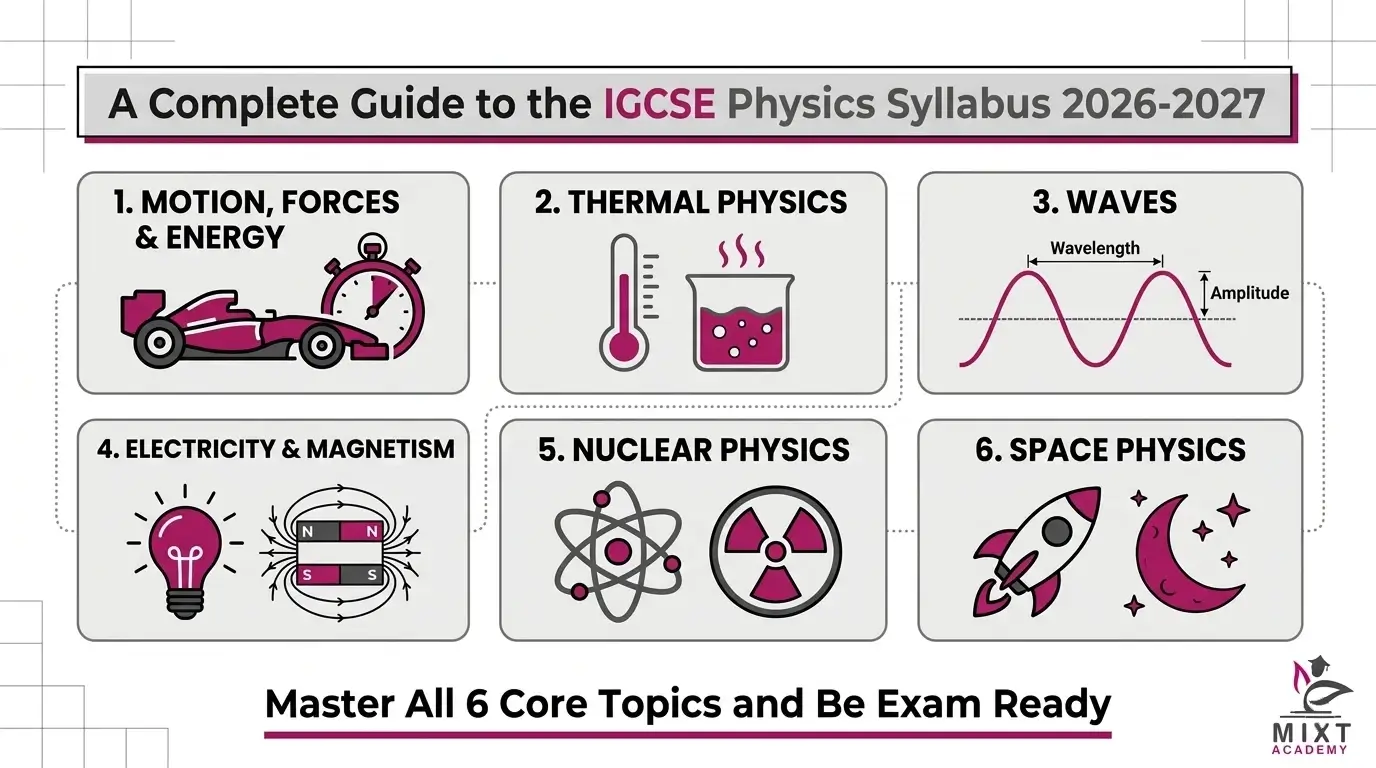
The syllabus is divided into 6 main sections. Each section builds on core physics principles and prepares students for exam questions.
Motion, Forces, and Energy
One of the core sections of the Cambridge IGCSE Physics syllabus, this is also one of the highest-scoring sections in the IGCSE Physics exam. Key Concepts Covered:
- Speed, Velocity, and Acceleration
- Distance-time and Velocity-time graphs
- Equations of Motion
- Newton’s Laws of Motion
- Mass and Weight
- Momentum and Impulse
- Work done, Energy and Power
- Pressure and Density
- Efficiency and Energy Resources
Additionally, students are taught how to:
- Interpret graphs
- Solve numerical problems
- Apply and manipulate formulae in real-life situations
Thermal Physics
Thermal physics is the branch of physics concerned with heat and how the various particles of the different states of matter behave. Key Concepts Covered:
- Various States of Matter
- Deep understanding of the Kinetic Theory of Particles
- Temperature and Internal Energy
- Thermal Expansion
- Heat Transfer: Conduction, convection, radiation
- Specific Heat Capacity
- The various pressures and laws of gases
This topic is one of the most conceptual in the Cambridge Physics syllabus tutoring in dubai It cannot be done by mere memorisation, as students are required to understand the various motions of particles and the energy transfer in the substance.
Waves
This is another major component of the IGCSE physics syllabus and is very highly examined. Basic Concepts Covered:
- Wave features (frequency, wavelength, amplitude)
- Wave speed formula
- Properties of sound waves
- Light reflection and refraction
- Light and Image Formation
- Formation of images by lenses
- The electromagnetic spectrum
Students should be skilled in theory and practical applications, including ray tracing and waves.
Electricity and Magnetism
This is one of the fundamental sections in the IGCSE Physics syllabus, and is heavily weighted. Basic Concepts Covered:
- Electric charge and flow of charge (current)
- Potential difference and resistance
- Ohm’s law
- Series and parallel arrangements
- Electrical power and the energy
- Magnetism and magnetic field
- EMI
- Generators and transformers
Students should be able to:
- Draw circuits
- Analyze circuits
- Solve numerical problems
- Explain safety precautions
Nuclear Physics
This part explains the atomic structure and radioactivity. Basic Concepts Covered:
- Structure of the atom
- Isotopes
- Radioactive decay
- Half-life problems
- Nuclear fission and fusion
- The benefits and hazards of radiation
Students should examine the actual applications of the use of radiation in medicine.
Space Physics (Cambridge Only)
This is part of the Cambridge IGCSE Physics Syllabus, and an introduction to Astronomy is offered. Basic Concepts Covered:
- The solar system
- Stars and galaxies
- The life cycle of a star
- The universe’s redshift and expansion
This is a theory-dominated field and is easier to score.
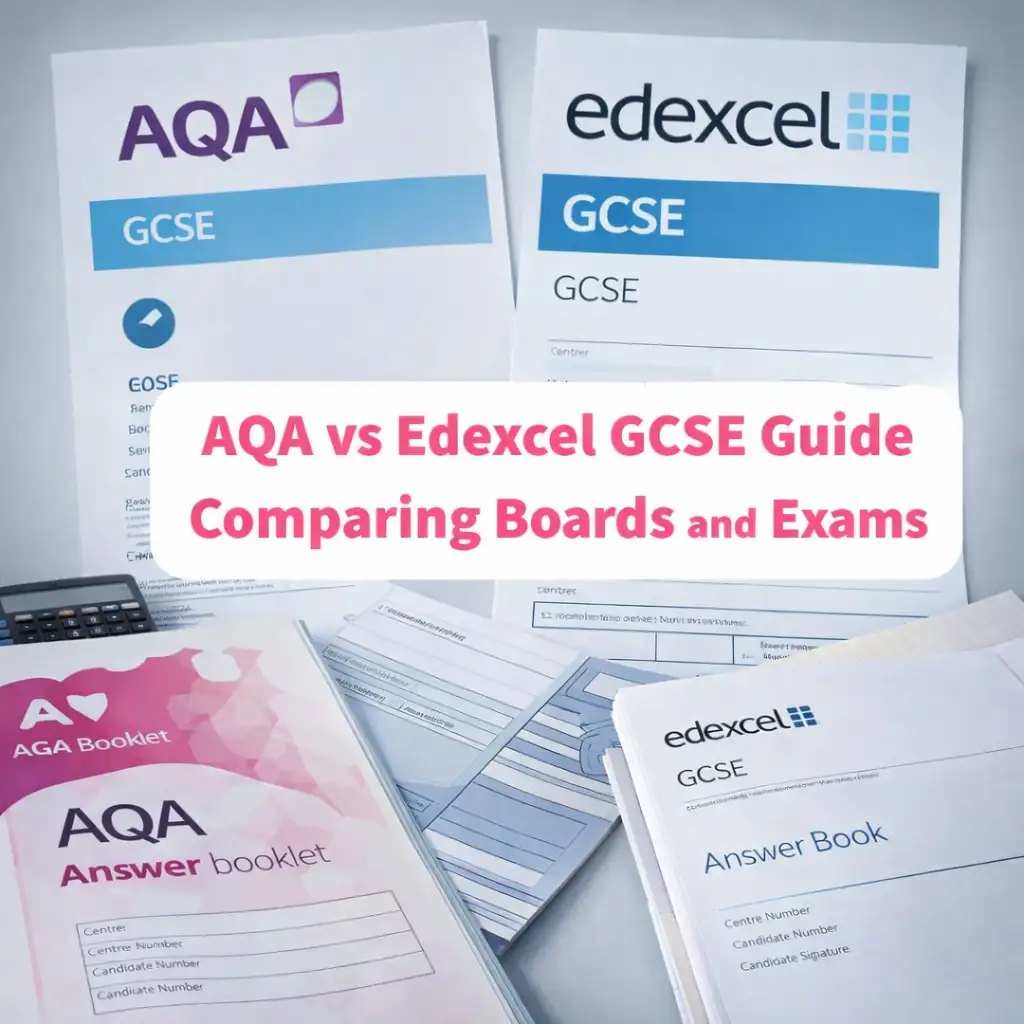
Cambridge vs Edexcel: Understanding the Difference
Cambridge IGCSE Physics Syllabus
- Space physics included
- Has core and extended levels
- Focus on practical work
IGCSE Physics syllabus Edexcel
- A slight variation in structure
- Absence of core/extended segregation
- More organised written exams
Both syllabuses, though differing, include nearly identical concepts.
Exam Structure and Assessment
Being aware of how you are assessed is just as important as being aware of the content.
Cambridge Exam Structure:
- Multiple-choice paper
- Theory paper
- Practical or alternative to practical
Edexcel Exam Structure:
- Two written papers
- Mix of short and long questions
Assessment Objectives:
- Knowledge and comprehension
- Application and problem-solving
- Experimental and Practical Skills
How to Study the IGCSE Physics Syllabus Effectively
To do well in IGCSE Physics, you should have a plan. The IGCSE Physics Syllabus is not about just learning a ton of facts. It is about understanding and applying formulas and practising a lot. This is the most correct mindset for this.
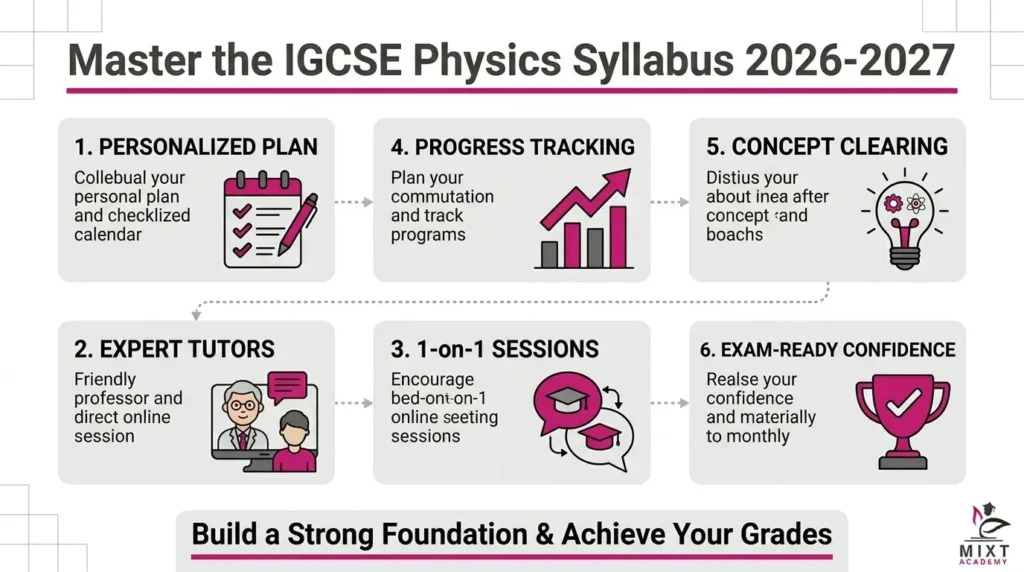
Understand Concepts Clearly
Do not memorise a lot of topics in repetition. This is a logic and reasoning-based subject. Do not memorise. Just focus on the concepts of how things occur and for what reasons.
Do you understand the difference in justification in these two behaviours?
- Why does an object accelerate when a force is applied?
- How is energy transferred in various systems?
- Why do waves behave differently in various mediums?
Practice Numerical Questions
Practice of various types of problems is a necessity, as they are different. An understanding of concepts is also necessary. You should:
- Practice different types of numerical problems
- Learn how to rearrange formulas
- Pay attention to units and conversions
- Show clear working steps
Use Past Papers
There are many advantages to using past exam papers for preparing for your exams. They help you understand:
- The structure of the exam
- The pattern of the questions
- The frequently covered topics
- What the examiners are looking for
Also, use marking schemes
Revise Regularly
Revision helps to retain the information when it is needed. This is especially important for Physics as there are many definitions, formulas, and concepts that can be lost if they are not practised repeatedly. To help in your revision, you can:
- Carry out daily revision of the formulas
- Create flashcards for definitions
- Create short notes to help you to revise
- Practice questions that are relevant to the topic.
Focus on Weak Areas
Avoiding topics that are more difficult can have negative effects. It is important to identify and work on these areas. To help you with this, you can:
- Go back to the concepts that are difficult
- Watch videos that help to explain and clarify these areas.
- Practice more questions in these weak areas.
- Break difficult topics down into smaller, more manageable parts.
Importance of the IGCSE Physics syllabus 2026 PDF
The IGCSE Physics syllabus 2026 PDF is an important document as it helps you to:
- Align your preparation with what is needed
- Keep track of the topics that you have covered.
- Stop you from studying topics that are not needed
- Give you a better understanding of what is expected in the exam.
Hire the Best Online Tutors for Your Child
Final Thoughts
The IGCSE Physics syllabus is a challenging document to work from; however, with the right techniques, it becomes more manageable. Success is only achievable by having a good understanding of the concepts. The use of smart revision techniques and the application of consistent practice.
The IGCSE Physics syllabus is designed to help you to achieve a good understanding of the subject in a practical way. It guides you to be practical in the use of the subject. This will help you to achieve a better understanding of Physics.