Starting out with programming can feel overwhelming when you do not know where to begin. Many learners open tutorials, look at lines of complex code, and quickly wonder if coding is too difficult for them. This frustration usually happens because they try to learn everything at once instead of following a clear and steady path.
A structured learning path makes all the difference by breaking big coding challenges into small, manageable steps. When you focus on one concept at a time, your brain has time to absorb the logic and build real confidence. You don’t need prior experience to get comfortable with programming, as long as you take it one day at a time.
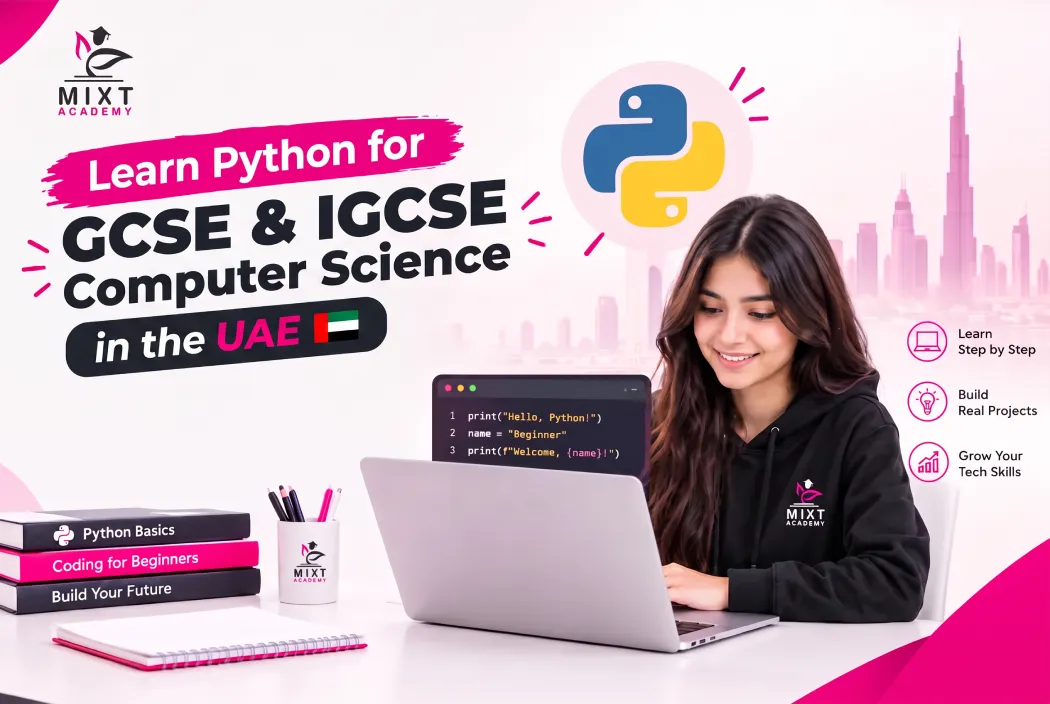
This guide shows you how to learn Python for beginners, step by step. We will cover essential programming basics, daily practice habits, fun beginner projects, how to fix common errors, and when structured academic support from Mixt Academy UAE can help.
Why Is Python a Good First Programming Language
Python is widely considered the best language for anyone starting their coding journey. Its syntax is clean, readable, and closely resembles everyday English, which removes much of the frustration beginners face. Instead of dealing with complicated symbols, you can focus entirely on learning basic programming logic.
As you progress, you will explore variables, data types, conditions, loops, and functions. These elements form the building blocks of all computer science. By solving small logical problems, you develop computational thinking skills that make future programming topics much easier to understand.
What Is the Best Way to Learn Python as a Beginner
The best way to learn Python as a beginner is to follow a logical progression instead of jumping between random tutorials. Having a roadmap keeps your study sessions focused and prevents burnout.
- Step 1: Understand basic programming concepts and how computers execute instructions.
- Step 2: Learn Python syntax, basic commands, and data storage.
- Step 3: Practise small coding exercises to reinforce new ideas.
- Step 4: Build beginner projects to apply what you have learned.
- Step 5: Review errors, debug your code, and understand why mistakes happen.
- Step 6: Move towards more challenging programming tasks and algorithms.
Learn Python Basics Before Moving to Advanced Topics
Before building large applications, every student needs to master a few foundational pillars. Variables store information, while strings and numbers handle text and calculations. Lists help organise multiple items in a single place.
Input and output functions allow your program to interact with the user. Conditional statements like ‘if’ and ‘else’ help your code make decisions. Loops, such as for and while, let you repeat actions without rewriting code. Finally, writing custom functions helps keep your programs organised and reusable.
Practise Python by Writing Code Regularly
Watching video tutorials can teach you the theory, but active practice builds real coding skills. To retain what you study, write small programs from memory instead of just copying lines of code.
Try altering existing examples to see what happens when you change certain values. Solve short programming challenges daily rather than studying for hours once a week. Consistent, short practice sessions help your brain build long-term familiarity with coding logic.
Build Simple Python Projects
Projects turn abstract concepts into tangible skills. Building something functional gives you a real sense of achievement and proves your code works.
- Calculator: Practise basic arithmetic operations and user input.
- Number Guessing Game: Use conditional statements and random numbers.
- Quiz Application: Store questions and scores using lists and loops.
- Simple Password Generator: Combine strings and random choices for security.
Working on these small projects improves your problem-solving abilities and keeps learning enjoyable.
Learn From Mistakes Instead of Avoiding Them
Encountering errors is a normal part of writing software. Syntax mistakes, incorrect indentation, missing brackets, and typos happen to every programmer, regardless of experience.
Instead of feeling discouraged, treat error messages as helpful clues. Read through the traceback details carefully to find out which line needs fixing. Test your code one small part at a time to isolate issues quickly. Debugging is a core skill that makes you a better thinker.
Create a Simple Python Study Routine
A flexible study routine helps students balance school homework with extracurricular coding practice. You do not need a rigid schedule, but consistency is key. Aim for short sessions of twenty to thirty minutes, three or four times a week.
Spend part of your time reviewing older topics to keep your memory sharp. Set small weekly coding goals, such as finishing a specific exercise or debugging a small program, to stay motivated.
When Should a Beginner Consider Extra Python Support
Sometimes, independent study hits a roadblock. A student might struggle with programming logic, feel that school lessons move too quickly, or find homework assignments confusing. When a learner needs personalised feedback and guided practice, working alongside a private online tutor can provide the clarity they need.
Structured learning support helps bridge knowledge gaps and boosts academic confidence. Programmes like those offered at Mixt Academy UAE provide tailored guidance to ensure students master foundational programming without feeling rushed.
Can Python Help With GCSE & IGCSE Computer Science
Practising Python directly supports school-level computer science by reinforcing computational thinking and algorithms. When students write real code, abstract theories about how computers process data suddenly make complete sense.
Working through practical coding tasks helps students apply classroom logic to real scenarios. Having a knowledgeable online GCSE computer science tutor can also help students prepare effectively for school exams and practical programming assessments.
10. Common Mistakes Beginners Make When Learning Python
Starting out with programming is an exciting milestone, but it is easy to stumble if you fall into common beginner traps. Awareness of these pitfalls helps you save time and build lasting confidence. Here are the key mistakes every beginner should avoid:
- Rushing into Advanced Topics Too Early: Trying to learn complex frameworks or machine learning before mastering basic loops and variables only leads to intense frustration.
- Watching Tutorials Passively Without Coding: Watching videos or reading guides without typing the code yourself creates a false sense of understanding.
- Copying Solutions Without Learning the Logic: Relying on copied code rather than working through the problem prevents real skill development and problem-solving growth.
- Giving Up Immediately After Hitting Errors: Treating error messages as failures instead of helpful clues stops you from learning crucial debugging skills.
- Studying Inconsistently: Cramming hours of coding into a single weekend is far less effective than short, regular daily practice sessions.
- Building Overly Complicated Projects: Trying to build massive applications right away can overwhelm your current skill level; start with small, manageable programs instead.
- Ignoring Code Revision: Forgetting to review past concepts means older syntax and foundational rules quickly fade from memory.
- Neglecting Indentation and Syntax Rules: Forgetting colons, improper spacing, or mismatched brackets will instantly break your code and cause confusion.
- Relying Solely on Memory: Trying to memorise every command word-for-word rather than understanding how and when to apply logic makes coding much harder than it needs to be.
- Isolating Yourself from Help: Pushing through hours of complete deadlock alone instead of asking a teacher or peer for guidance can stall your momentum.
A Beginner-Friendly Python Roadmap
A clear roadmap helps learners visualise their progress from their very first day of coding up to confident problem-solving.
- Stage 1: Learn Python basics, variables, and output commands.
- Stage 2: Master conditions and loops to control program flow.
- Stage 3: Explore functions and organise data using lists.
- Stage 4: Strengthen problem-solving skills with small logic puzzles.
- Stage 5: Build and test simple beginner projects.
- Stage 6: Transition toward more advanced programming concepts and algorithms.
Build Python Skills With the Right Online Tutoring Support
Learning Python is easier when students have clear explanations, guided practice, and support when they get stuck. A IGCSE computer science tutor can also help learners connect programming concepts with the wider skills needed for their studies. Start building practical Python skills through focused learning that encourages problem-solving, regular practice, and confidence with every new program.
Closing Notes
Learning programming becomes more manageable when students build their knowledge step by step. Understanding the basics, practising regularly, and creating small projects can turn difficult concepts into practical skills that improve with time.
Making mistakes is an important part of becoming a better programmer. Debugging teaches students to think carefully, identify problems, test solutions, and stay persistent when their code doesn’t work as expected.
There is no need to rush the learning process. With consistent practice, curiosity, and a willingness to learn from mistakes, beginners can gradually develop the confidence and skills needed to approach programming independently.