This guide explains what physical education is, why it is important at every stage of school, and how the right support can help students do well in both the practical and theoretical parts of the subject.
What Does Physical Education Actually Involve?
Physical education is a planned, standards-based subject that develops three core areas:
- Cognitive skills include understanding rules, strategies, and the science behind movement.
- Affective growth means building motivation, confidence, and a positive attitude toward health.
- Psychomotor development involves mastering physical coordination, technique, and motor skills.
Unlike casual sports participation, PE follows a structured curriculum with clear learning objectives. Students are not just playing games; they are learning anatomy, biomechanics, nutrition, and psychology alongside physical skill development.
This is why PE is an examined subject at GCSE, IGCSE, and A-Level. It combines theoretical understanding with practical performance assessment.
Hire the Best Online Tutors for Your Child
Why Physical Education Matters More Than Many Realise
Physical Health Benefits
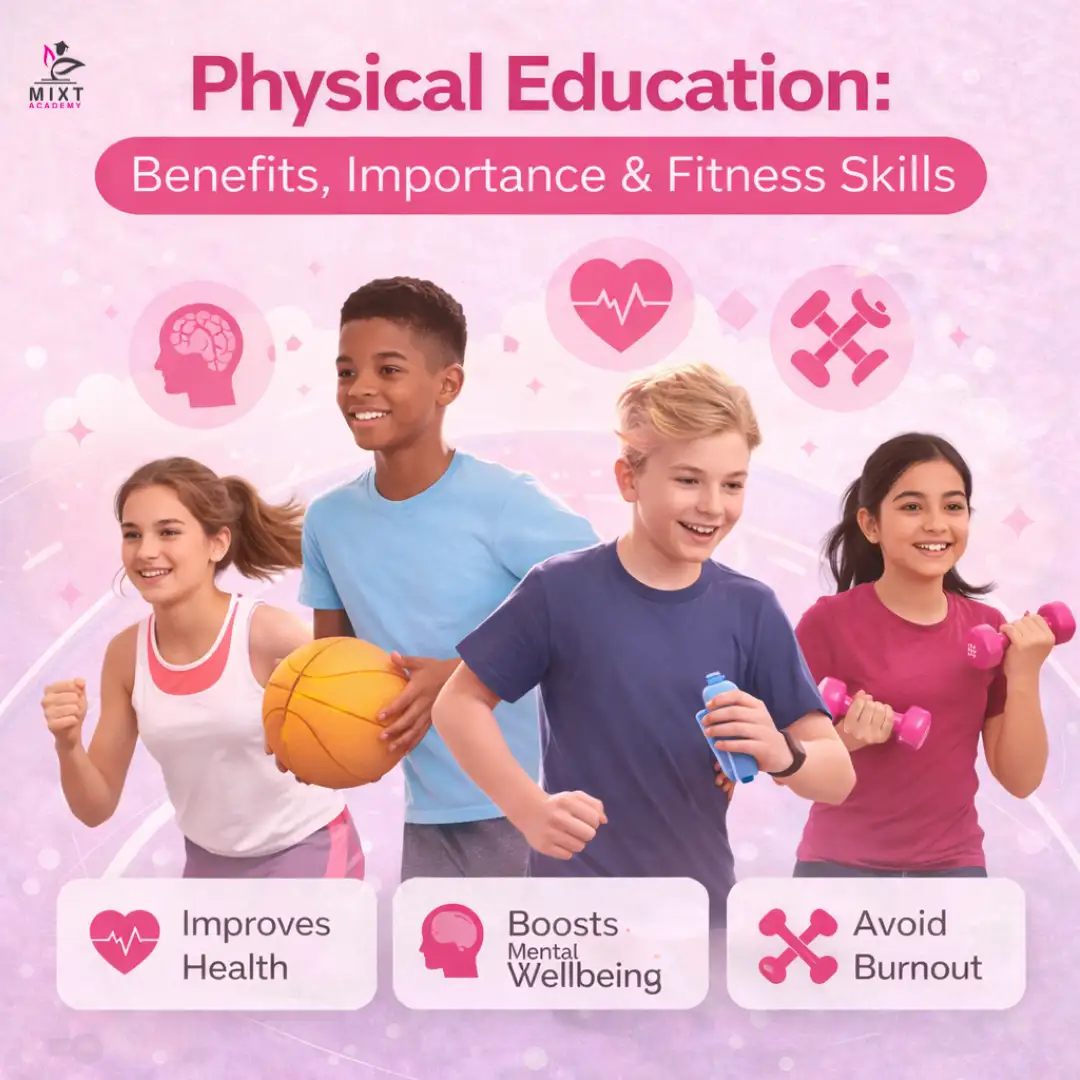
Taking part in PE lessons regularly helps students improve their coordination, balance, and heart health. It also lowers the risk of problems like obesity, type 2 diabetes, and heart disease later in life. For many students, PE is the only time each week when they get regular, organised exercise at school.
Mental and Cognitive Advantages
Physical activity is known to help the brain work better. Moving around boosts blood flow to the brain, which can improve memory, focus, and how quickly students make decisions. Many students say they feel more alert in lessons after PE, and research shows that being active can help students pay better attention in class.
Social and Emotional Growth
Team sports in PE help students build skills like communication, leadership, and understanding others. They also learn how to deal with both winning and losing positively. These lessons help students stay strong and cope better during exams and other stressful times at school.
Academic Performance Connection
Many studies show that active students tend to do better in school, especially in subjects where they need to focus for a long time. This is one reason why PE is still a required part of most UK school programmes, even though students face more academic pressure now.
Students getting ready for big exams like GCSEs or A-Levels often notice that staying active helps them study more effectively. Families who work with A-Level tutors also see that students do better when regular exercise is part of their weekly routine.
Physical Education as a Subject: GCSE, IGCSE, and A-Level
In primary and early secondary school, PE is mostly about taking part and building skills. At GCSE, IGCSE, and A-Level, though, it becomes much more academically challenging.
At GCSE, students complete both a practical performance and a written exam that covers topics like anatomy, physiology, training methods, and sports psychology. Many are surprised by how tough the written exam is, since it tests scientific knowledge, not just physical skills. Experienced GCSE tutors can really help, especially for students who are strong in sports but find it hard to turn their practical knowledge into good written answers.
IGCSE Physical Education, which is offered around the world, is structured much like GCSE but often puts even more focus on theory because of its international standards. Students often need help linking scientific ideas, like energy systems or biomechanics, to real sports examples in a way that meets exam board requirements. IGCSE tutors who know the Cambridge or Edexcel International courses can help with this, especially for students moving between different school systems.
A-Level Physical Education goes even deeper into sports science, with topics like exercise physiology, biomechanics, sports psychology, and how society affects participation. The work is much more analytical and often requires essay-style answers that compare different theories. Many students look for A-Level tutors with real sports science experience to help them understand complex topics and write better long answers, especially before final exams.
At all three levels, students usually get the practical side of PE but often find it hard to show what they know in exams.
The Growing Role of Online Physical Education Support
The pandemic sped up the move to online learning in almost every subject, including PE. Although practical assessments still need to be done in person, more of the theory for GCSE, IGCSE, and A-Level PE is now taught and supported through online tutoring.
This change has been especially helpful for students who need one-to-one help with exam technique, scientific terms, or essay structure. These are areas that classroom teaching, often divided among many students, cannot always cover for each person. Online support usually offers:
- Explaining complex physiological processes in simpler terms
- Practising exam-style questions and getting detailed feedback
- Making command words and mark scheme expectations clearer
- Helping students feel more confident in scientific writing and analysis
Platforms like Mixt Academy offer this kind of targeted online support. Our private tutors create personalised learning plans that help students improve their PE theory while still keeping up with their other subjects.
Shaping Healthier, More Capable Students
Physical education is much more than just a break from schoolwork. It builds lifelong health, confidence, and personal growth. With support at every stage, PE brings real academic value as well as clear physical benefits.
If a student needs help getting ready for a GCSE practical, understanding IGCSE exam requirements, or handling the challenges of A-Level sports science, focused academic support can turn PE from an overlooked subject into a real strength in their final results.