
The positive side of it is that it is possible to get better grades in the exam with a good approach and a qualified Physics tutor. This guide outlines the effective, systematic approaches for purposefully and confidently revising physics.
Why Many Students Struggle with Revision Physics
The syllabus for the IGCSE/GCSE Physics includes many topics, including mechanics, thermal physics, waves and electricity. There are also several formulas, definitions and applications in nuclear physics. This is why many students find it difficult to master this course, besides the physics tutoring in dubai requirements.
Physics is a cumulative subject, and some concepts learned early will be helpful later on in revision. It’s important not to learn everything at once but rather to learn it in smaller pieces. Toppers use active revision strategies to achieve success since they revise with strategy instead of just talent.
Best Revision Techniques for IGCSE & GCSE Physics Students
Here are the best revision techniques for IGCSE and GCSE Physics students to excel in the exams.
Understand the IGCSE & GCSE Physics Exam Format First
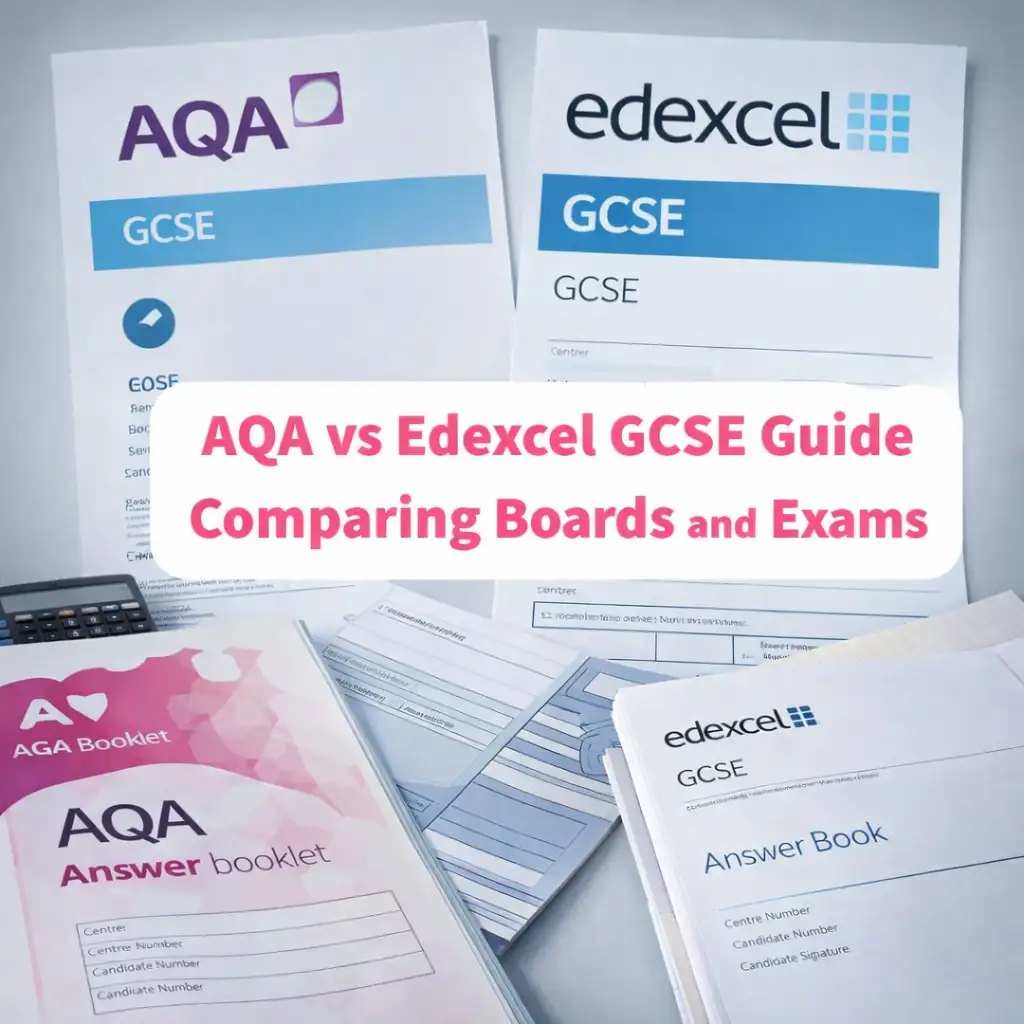
It is important to have a clear understanding of the structure of your Physics exam and what skills are being assessed before you begin your revision. The structure of each exam board is slightly different, and it’s better to be familiar with this before you begin revision so you can avoid being caught out.
Cambridge IGCSE Physics (0625 / 0972)
The specification consists of three papers, which are assessed at either the Core (Grades 1-5) or Extended (Grades 1-9) level.
- Paper 1 (Multiple Choice): 45 minutes, 40 marks (30%). Contains 40 questions related to Core or Extended content.
- Paper 3 or 4 (Theory): 1 hour 15 minutes, 80 marks (50%). Paper 3 is Core, and Paper 4 is Extended. It has short questions to answer and structured questions.
- Paper 5 or 6 (Practical): 1 hour 15 minutes (P5) or 1 hour (P6), 40 marks (20%). Assesses experimental skills. Paper 6 is the written “Alternative to Practical” paper.
Pearson Edexcel International GCSE Physics (4PH1)
The Pearson Edexcel structure is linear and untiered, with all pupils sitting the same exams.
- Paper 1P: 2 hours, 110 marks (61.1%). Focusses on fundamental physics concepts.
- Paper 2P: 1 hour 15 minutes, 70 marks (38.9%). Takes an in-depth approach to “Physics Only” topics.
- Question Types: Multiple choice, short answers, calculation-based.
AQA GCSE Physics (UK)
AQA has divided the syllabus into eight topics, which are examined in two papers, each of 1 hour and 45 minutes duration, equally weighted.
- Paper 1 (Topics 1–4): Energy, Electricity, Particle Model of Matter, Atomic Structure
- Paper 2 (Topics 5-8): Forces, Waves, Magnetism & Electromagnetism, Space Physics
Knowing what each exam is like will aid in preparation. There are different types of questions (recall, data analysis, multi-step calculations) that call for different revision strategies. If you are aware of the expected content of the papers, you can concentrate on the preparation and hence enhance your overall performance.
Use the IGCSE & GCSE Physics Official Syllabi as Your Revision Roadmap
The IGCSE and GCSE revision syllabus document is one of the most useful but least used revision aids. The syllabus is produced by your exam board, either Cambridge Assessment International Education (CAIE) or Pearson Edexcel, and contains all topics and learning objectives that may be included in your exam.
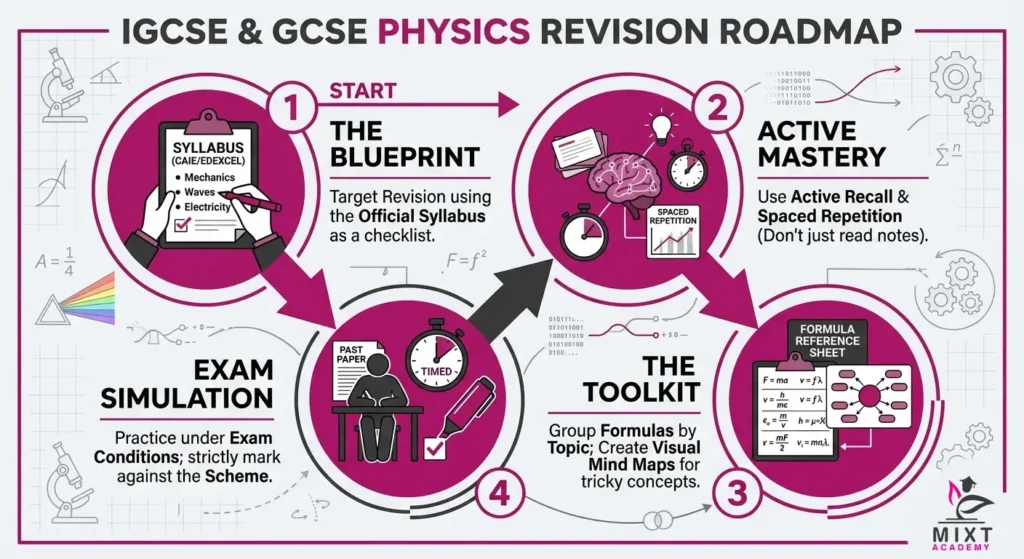
Download the latest version from your exam board’s website and turn it into a personalised checklist. Work through each point and mark it as confident, needs more work, or not yet started. This way, your revision is targeted rather than scattered. You cover what matters, and nothing important gets left out.
Revise Topic by Topic with a Clear Focus
Rather than jumping between subjects, tackle physics one topic at a time. This builds a solid foundation in each area before you move on. Here is a brief overview of the main content areas and what to focus on in each:
Forces and Motion
Understand vector quantities, Newton’s three laws, and the relationships between speed, acceleration, and momentum. Practise rearranging the relevant equations.
Energy, Work and Power
Focus on energy types, conservation principles, and how energy transfers between systems. Diagrams showing energy flow are particularly useful here.
Thermal Physics
Connect theory to real-world situations; heat transfer through conduction, convection, and radiation shows up in everyday contexts and in exam questions alike.
Waves
Practise the wave equation (v = fλ) alongside the distance-speed-time relationship. Sound waves, light, and the electromagnetic spectrum all feature regularly.
Electricity and Magnetism
Because neither electricity nor magnetism can be seen directly, these topics can feel abstract. Build understanding through practice problems that gradually increase in complexity.
Nuclear Physics
Understand the properties of alpha, beta, and gamma radiation. Half-life calculations require both conceptual understanding and formula practice.
Go Beyond Passive Reading: Use Active Recall and Spaced Repetition
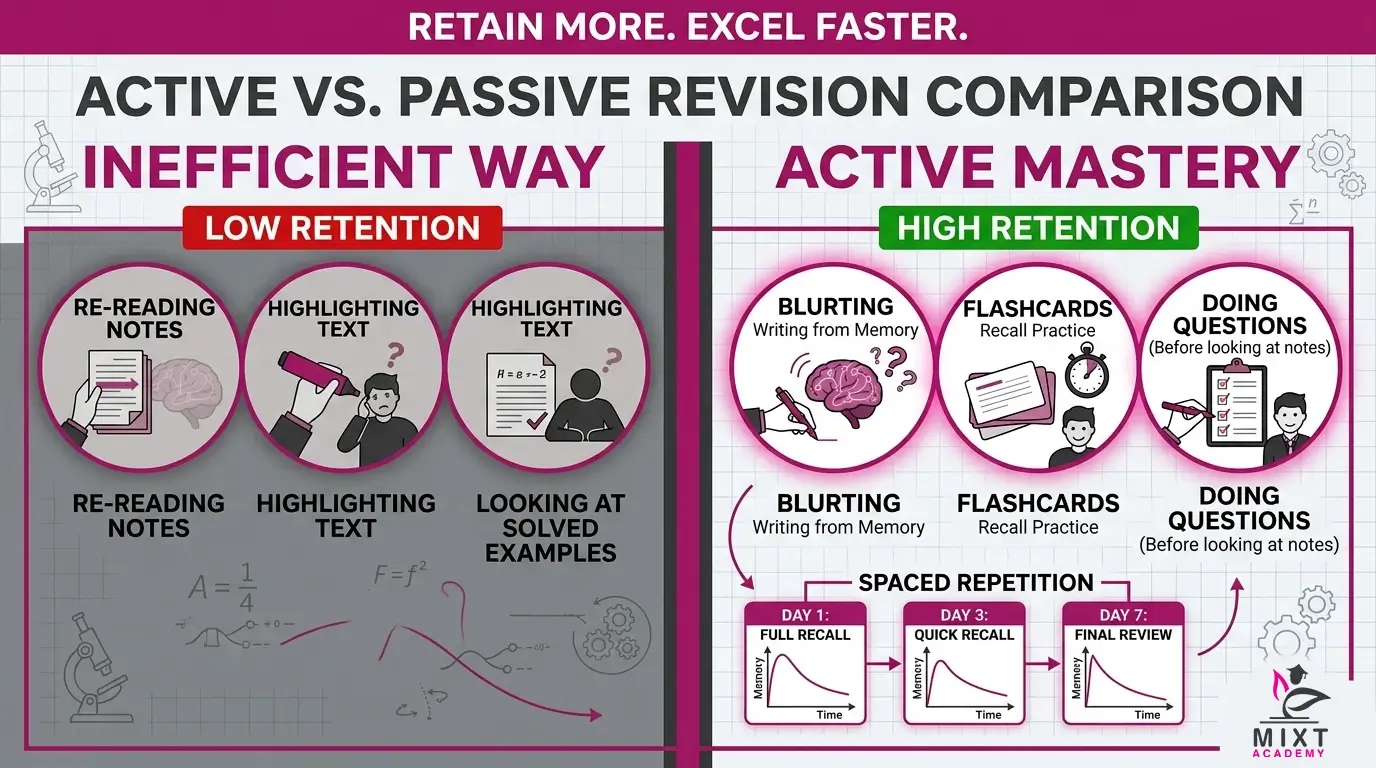
Reading through notes is a necessary starting point, but it is not enough on its own. To retain information long-term, you need revision techniques that force your brain to actively retrieve what it has learned.
Active recall involves testing yourself without looking at your notes, closing the book and writing down everything you can remember about a topic, for instance. This technique strengthens memory pathways and reveals gaps in your knowledge early, when there is still time to address them.
Spaced repetition takes this a step further by revisiting material at increasing intervals. Rather than reviewing a topic once and moving on, you return to it after a day, then three days, then a week. Because you are coming back to the material just before you are likely to forget it, retention improves significantly.
Practical ways to use these techniques include making flashcards for definitions and formulas, teaching a concept out loud to a friend or family member, or drawing diagrams from memory and then checking them against your notes.
Master Your Physics Formulas
Physics at the IGCSE and GCSE levels involves a substantial number of equations. Simply writing them out repeatedly may help with initial memorisation, but understanding how and when to use each formula is what will earn marks in the exam.
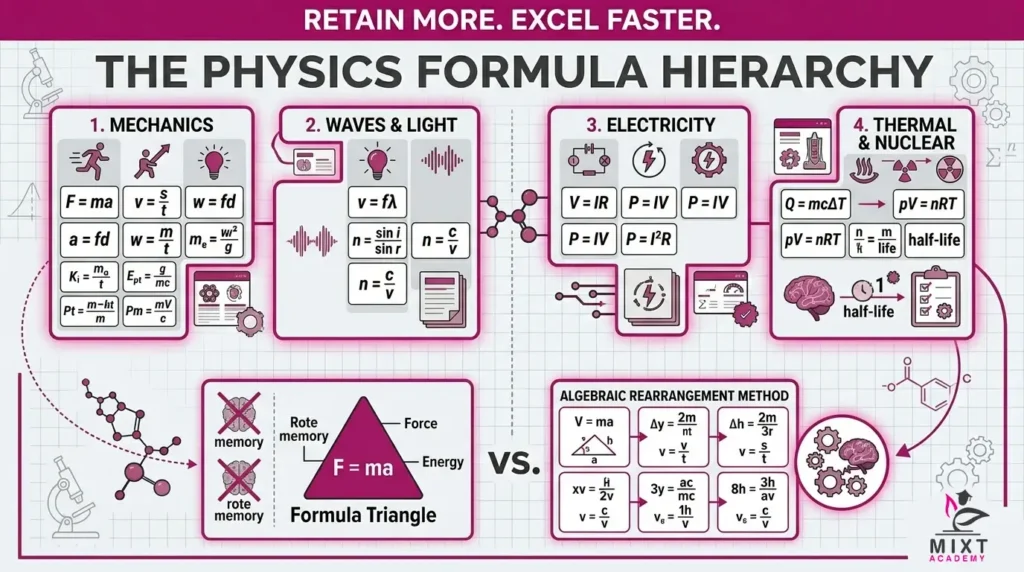
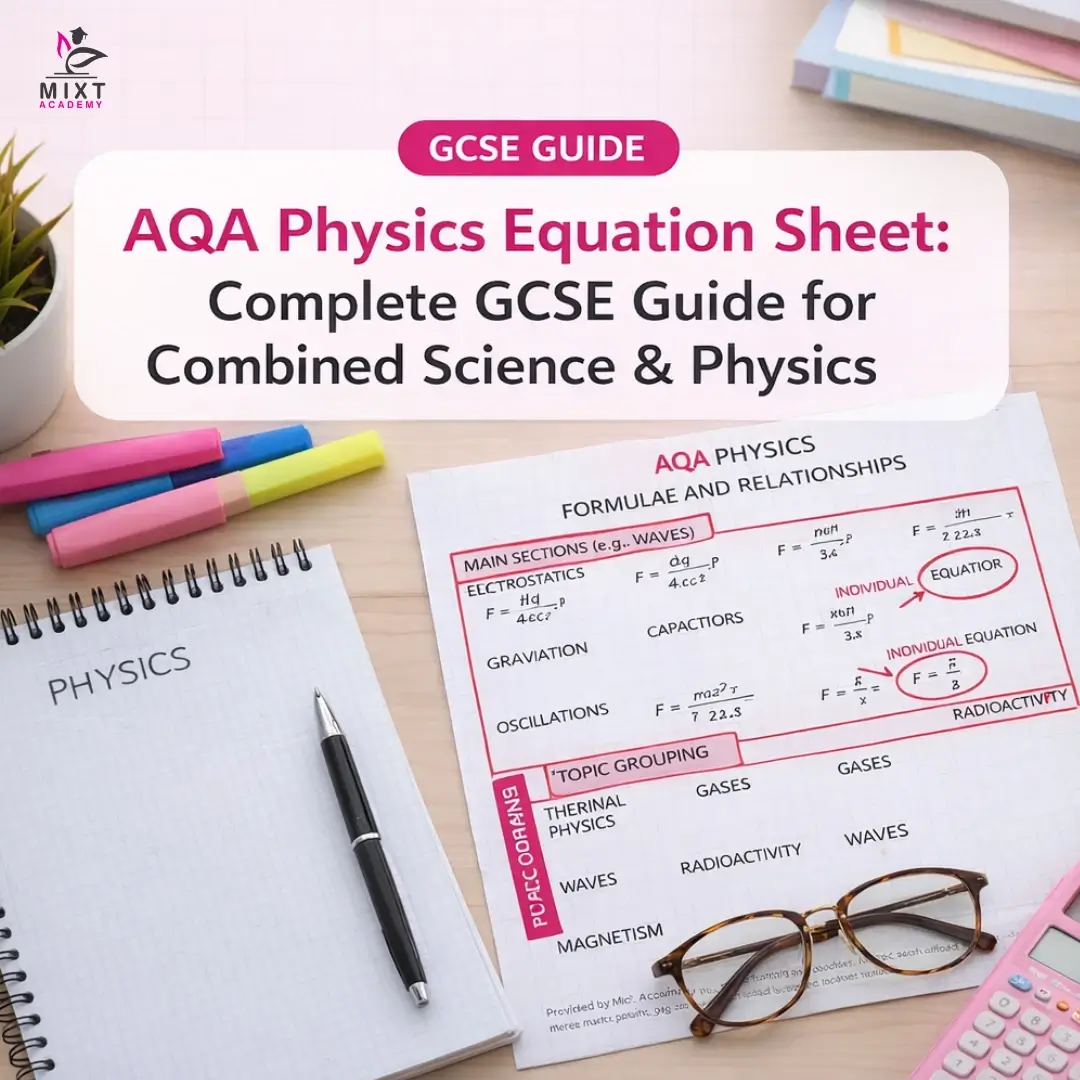
Grouping formulas by topic makes them easier to recall under pressure. Memory techniques can also help, for example, associating the wave equation (v = fλ) with a visual image or short phrase to make it stick. Most importantly, practise applying formulas in different contexts.
A student who can solve a straightforward F = ma problem is well prepared, but one who can rearrange the same equation to find mass or acceleration in an unfamiliar scenario is even better placed.
Keep a dedicated Physics formula reference sheet as a revision tool, but make sure you understand the physics behind each equation rather than relying on memorisation alone. Some exam boards provide a formula sheet, but knowing when and how to apply each one is still your responsibility.
Make Past Papers Central to Your Preparation
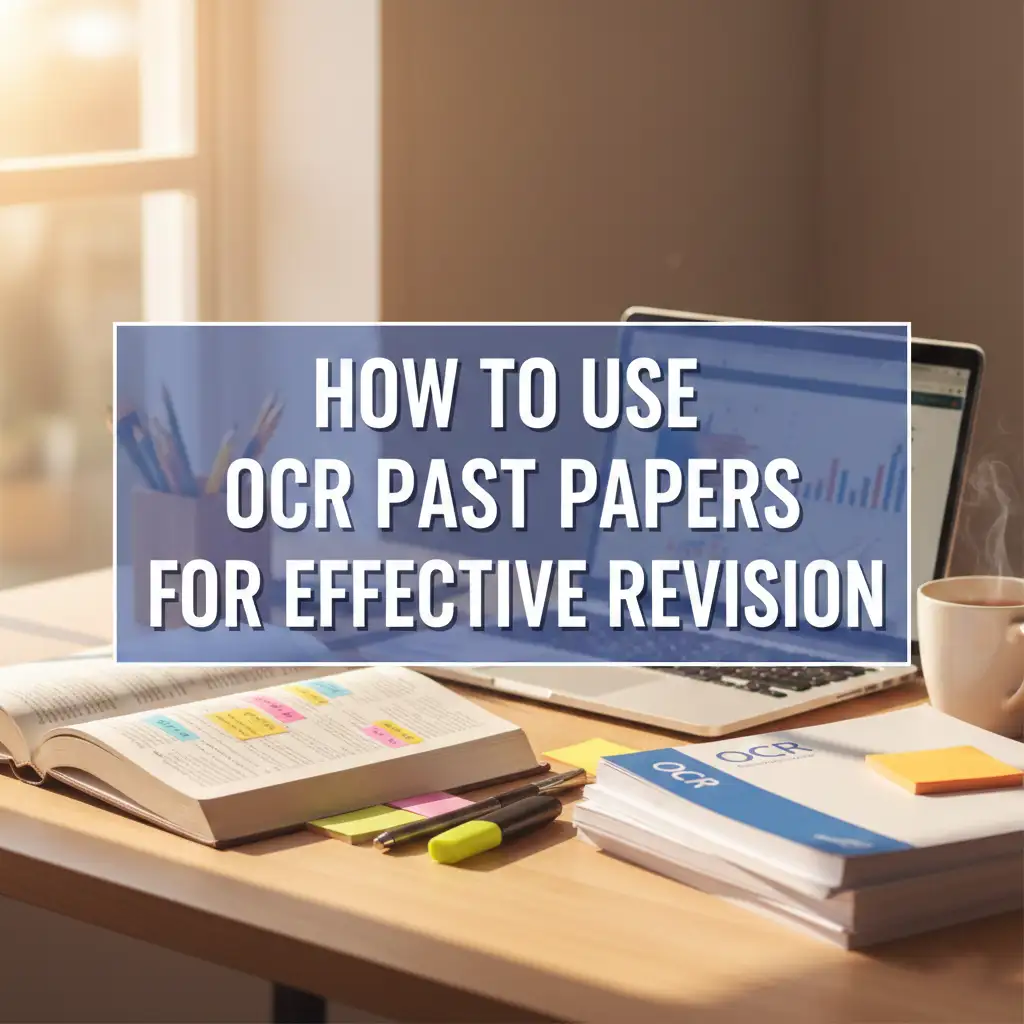
Past exam papers are among the most valuable revision resources available. They give you a direct insight into the style of questions examiners set, the level of detail expected in answers, and the specific terminology that earns marks.
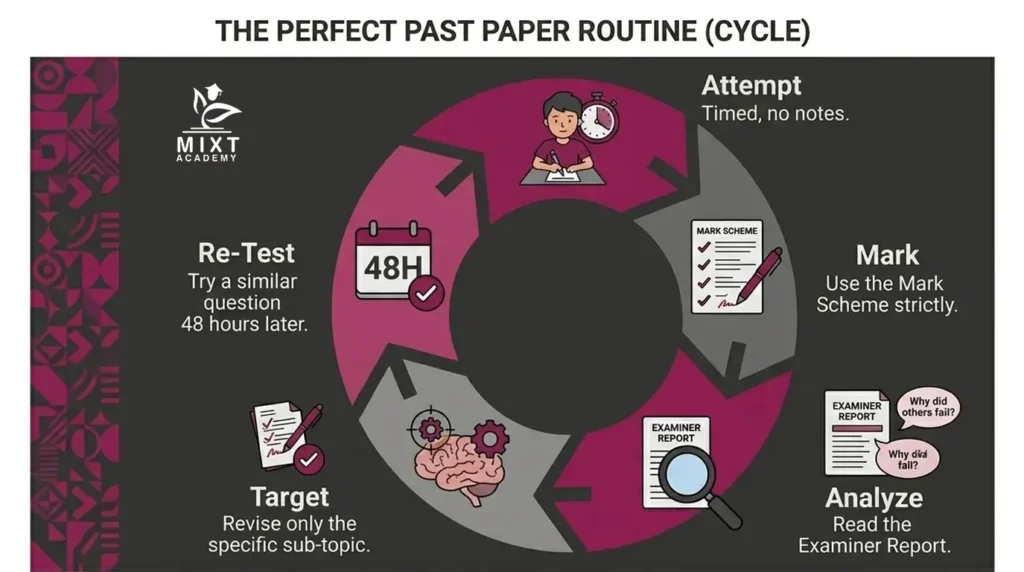
When starting with past papers, work through them without time pressure. Focus on understanding what each question is actually asking and study the mark scheme carefully. Pay attention to the keywords that examiners are looking for. Examiner reports, published alongside mark schemes, are equally valuable; they explain common mistakes and describe what distinguishes a strong answer from an average one.
As your exams approach, move into timed practice under proper exam conditions. This builds both your speed and your confidence and helps you manage the pressure of the real thing.
Use Visual Aids and Video Explanations
Physics is a subject where visual understanding genuinely tutoring supports in dubai. Many abstract concepts, such as electromagnetic induction, wave behaviour, and nuclear decay, become far clearer when you can see them represented visually or explained step by step.
Creating your own visual aids is a particularly effective revision strategy. Drawing circuit diagrams, wave patterns, and force diagrams by hand reinforces your understanding in a way that simply reading does not. Mind maps help you see how topics connect, while flowcharts are useful for structuring your approach to multi-step calculation problems.
Educational video content from experienced GCSE physics tutors and examiners can also clarify tricky concepts. Look for explanations that go beyond surface-level descriptions and walk you through worked examples in detail.
Hire the Best Online Tutors for Your Child
Closing of the Physics Revision Guide
Effective physics revision is not about putting in more hours; it is about using the right methods consistently. Start with the official syllabus, work through each topic with focus, build your formula knowledge through application, and make past papers a regular part of your routine. Add active recall techniques and visual learning to that mix, and you have a revision plan that genuinely works.
Strong results in GCSE and IGCSE Physics tutors are achievable for any student who is willing to put in the effort with the right strategy. Start early, stay consistent, and trust the process.