Understanding GCSE Grade Boundaries and How to Prepare?
Grade boundaries set by GCSE are the minimum number of marks you need to score in your exam to achieve a certain grade. The grade boundaries change for every exam series, so they will be different in 2026 than they were in previous years. Grade boundaries are set after your GCSE exams have been marked, so you won’t know the exact grade boundaries for the 2025 exams before you take them. This comprehensive article will provide you with the grade boundaries for GCSE, help you understand them, and provide revision tips to help you succeed in your exams.
Understanding GCSE Grade Boundaries and How to Prepare?
Add a header to begin generating the table of contents
Grade boundaries set by GCSE are the minimum number of marks you need to score in your exam to achieve a certain grade. The grade boundaries change for every exam series, so they will be different in 2026 than they were in previous years. Grade boundaries are set after your GCSE exams have been marked, so you won’t know the exact grade boundaries for the 2026 exams before you take them. This comprehensive article will provide you with the grade boundaries for GCSE, help you understand them, and provide revision tips to help you succeed in your exams.
What are GCSE grade boundaries?
Grade boundaries are the minimum mark or score you need to achieve each GCSE grade. They are set once marking is nearly complete, after students have taken the exam. Grade boundaries usually change each year to ensure fairness and consistency in the marking process, reflecting any differences in difficulty. To put it simply, the harder the paper, the lower the grade boundary. This means your grade should not be worth any more or less than the same grade in previous years.
GCSE Grades Explained
GCSEs are graded differently in England, Northern Ireland and Wales. Below is the explanation for the grade system for these regions.
GCSEs in England
All GCSE subjects in England have been graded 1-9 since 2020, replacing the old A-G system, with 9 being the highest grade and 1 being the lowest; U means ‘ungraded’.
Students need to achieve a 4 for a ‘standard pass’ and 5 or above for a ‘strong pass’. Grades 1-3 also count as a pass, but many colleges and universities ask for a minimum of five GCSEs at grades 9 to 4. Some require you to get at least a grade 6 or 7 in the subject you wish to study. Requirements will vary across schools and colleges, so it is always best to check and make sure. You will have to resit next year if you get a grade 3 or below in maths or English language.
GCSEs in Northern Ireland
In Northern Ireland, grades are A* to G, with a new C* grade being introduced in 2019. However, some students may take exams set by English boards, in which case they will also get results with grades 9-1.
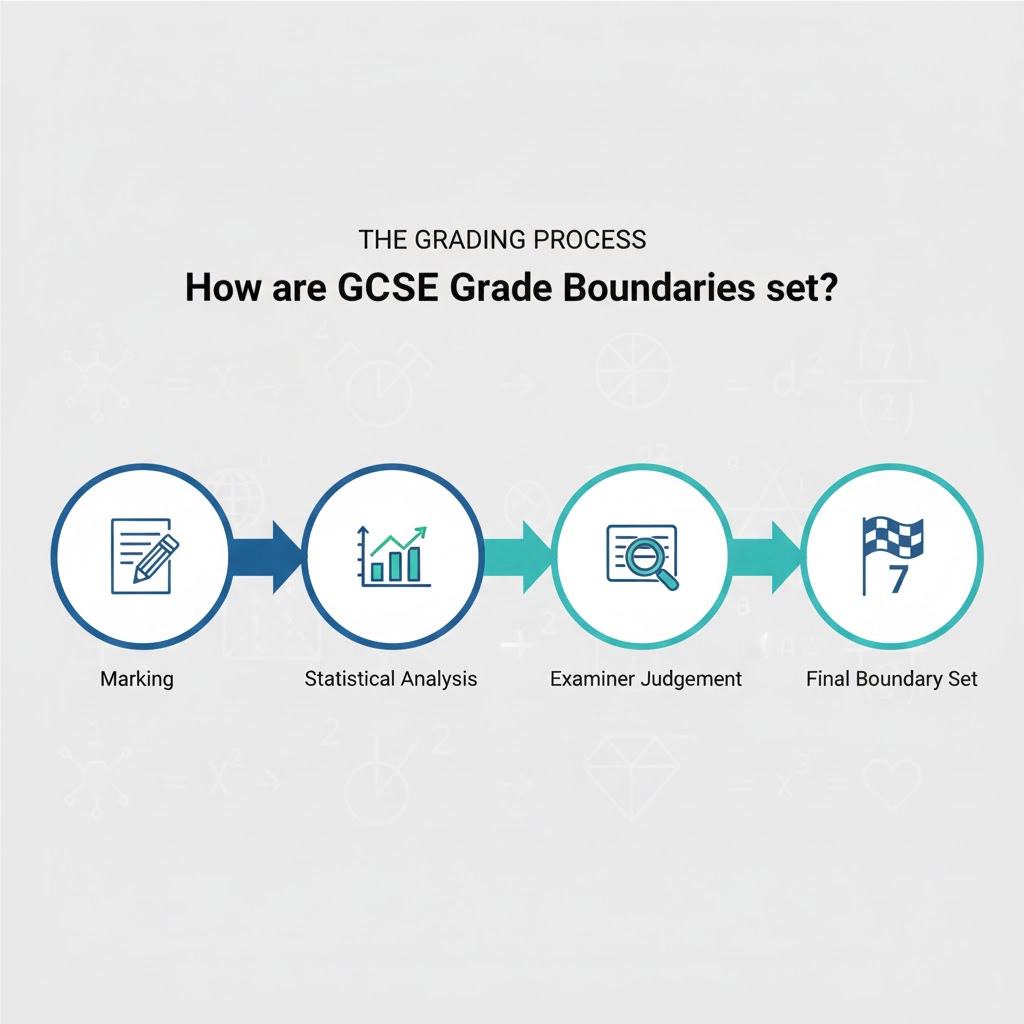
How are GCSE grade boundaries set?
Exam boards such as AQA, Pearson Edexcel and OCR have a careful process in place for determining where the grade boundaries should be for each exam series. The process involves several factors:
Exam Difficulty
For each new exam series, new GCSE questions are written by a team of subject specialists. Therefore, with each new GCSE exam series, there are minor fluctuations in the level of difficulty of each paper in comparison to previous years. If a group of GCSE students finds an exam particularly challenging, then the grade boundaries will be lowered slightly to compensate, and the same goes for the other way. This ensures the consistency of GCSE grades from one year to the next.
Statistical Analysis
Exam boards use statistical analysis from previous learning groups of GCSE students to announce how they set GCSE grade boundaries. Each affiliate’s results for individual GCSE subjects are compared to those of previous years to provide consistency in grading standards. Previous achievement data of the current student group can also be used as a standard. Careful attention is paid to those students around the grade boundaries to ensure they are set fairly.
Moderation
A sample of exam papers from each GCSE exam will be sent for moderation. Moderation is a second round of marking by another examiner to ensure that the marks awarded are consistent and fair.
Examiner Judgements
Experienced examiners will review a sample of exam papers from each GCSE exam. They will look at papers scoring a range of marks and compare them to papers from previous years. They will make recommendations to the exam boards on where they think the grade boundaries should be set.
What is the 9-1 grading system?
The 9-1 grading system was introduced to replace the traditional A*- G grades, aiming to provide a more accurate measure of student performance.
The new system ranges from 9 (highest) to 1 (lowest). It was designed to increase the challenge for students and create clearer differentiation among their abilities. The transition from the old to the new grading system began in 2017. It aimed to make the grading criteria more strong and more reflective of students’ knowledge, understanding and skills.
Comparison between new and old GCSE grades
A grade 4 is the new minimum standard for colleges, universities and employers. This is equivalent to a low C on the old grading system. A grade 5 is a strong pass; this is equivalent to a high C. A grade 7 is equivalent to an A, and a grade 9 is higher than the old A* grade. The new grading system helps to differentiate between students scoring the higher grades. The old system had three top grades: B, A and A*. The new grading system has four top grades: 6, 7, 8 and 9.
Why are the grade boundaries important?
Grade boundaries are an important component in the grading process. They define the score ranges required for each GCSE grade. These boundaries provide consistency and justice in awarding grades, mirroring the comparative performance of all GCSE students in a given exam series. These boundaries greatly influence the final grades of students, impacting their academic performance, competency for higher education, and upcoming job opportunities.
When teachers mark student work, particularly end-of-unit assessments, the thing that GCSE students look for first is the grade that their effort has achieved. This is because grades have such a significant impact on their academic progress. But it is essential to recognise the difference between grades and your knowledge and understanding.
To improve your grade, you need to focus not just on your knowledge and understanding but how you apply this to the questions in the exams. Using tutoring platforms such as Mixt Academy for your GCSE can help you gain the exam skills you need to improve your grades.
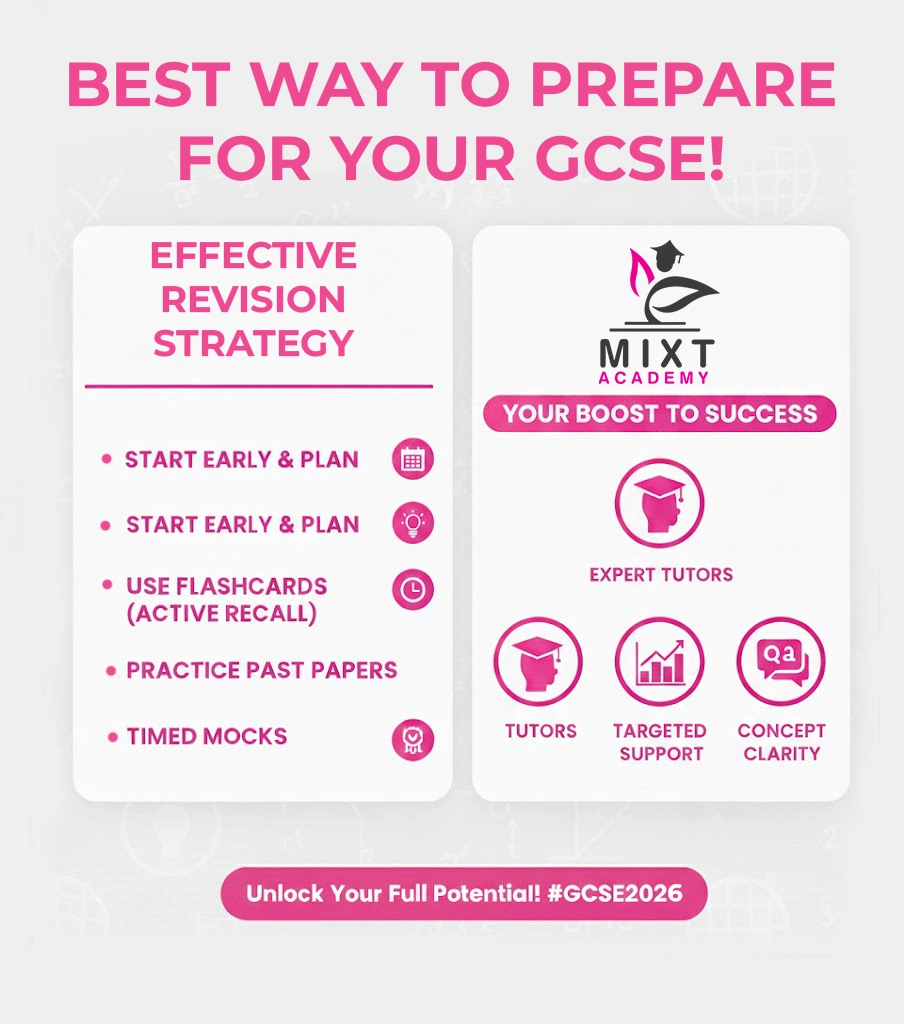
What is the best way to prepare for your GCSE exam?
The best way to prepare for your GCSE exam is to start your revision early and get help from GCSE tutors like Mixt Academy.
Begin with a list of topics for all your GCSE courses and highlight the ones you are the most unsure about.
Create a revision timetable with short periods of focus, giving the most time to these topics. Ideally, you will want to revise all the topics for each subject, but often there is no time.
Prioritising topics will help you make the best use of the time you do have, and will give you the biggest increase in marks for your GCSE exams.
Use revision notes to revise GCSE content. Flashcards are a great tool to practice recall, reinforce key concepts and boost memory retention.
Then use exam questions to test your understanding and identify any areas that you are still unsure of.
It is also super helpful to use 2025 GCSE past exam papers to practice your exam technique.
Set a timer for the amount of time allowed for your GCSE exam, and sit the paper under exam conditions. This will help you to manage your time more effectively. It will also help increase your exam stamina.
It is difficult to concentrate and to write for extended periods, so you need to practice this before the big day.
Will grade boundaries be lower in 2026?
Grade boundaries are set once students have taken their exams and their papers are marked. But regardless of what the boundaries are, it is important to perform to the best of your ability in your assessments. You cannot change grade boundaries, but you have the potential to improve your grade by studying, revising, hiring Mixt Academy, and putting some of our exam essentials into practice.
Boundaries usually change each year, but the process is in place to ensure fairness for all students across different year groups, providing a consistent way to measure your achievements so that grades accurately reflect your knowledge, regardless of what year group you are in.
Does my result slip tell me how far off the next grade I was?
Students won’t see how far off the next grade they were on results slips, but they will see marks for individual exam papers as well as their grades.
Grade boundaries are published on the exam board website on results day, so students can see how close their mark is to the next grade boundary.
Do my grades get rounded up if I am some marks off?
Rounding up marks is not common, but in some qualification components, exam boards scale marks to make sure that weighting is correct. In these cases, marks are rounded to the nearest whole number, so they could be rounded up or down.
GCSE Modern Foreign Languages is an example in which each component, such as listening, reading, speaking and writing, has an equal weighting, but the maximum marks are not the same. For the foundation tier, the listening component has a maximum of 40 marks, while the reading component has 60 marks. In this case, exam boards multiply the listening component by 1.5 to make sure that each component has the same weight.
So, for example, if a candidate got a score of 109.5, then this would be rounded to a mark of 110. If a candidate got a score of 109.1, then this would be rounded to 109. If the grade 8 boundary were at a mark of 120, then the first candidate would achieve a grade 8, but the second one would achieve a grade 7.
Bottom Line:
Exam boards establish grade boundaries to reflect student performance in any given year. It is important to understand that the GCSE grade boundaries are set after the GCSE exams have been marked. Each GCSE exam paper is different, so the level of difficulty of the paper as a whole can vary slightly from year to year. Looking at the GCSE grade boundaries for previous years can help you get an idea of the marks you need in 2025 to achieve the grade you want. With this information, expert GCSE tutoring support from Mixt Academy and revision using past papers, you can gain your desired grade with confidence.
Grade boundaries are set using a process that is standardised across all exam boards. A group of senior examiners set the boundaries based on the difficulty of the paper, the performance of the students, and the quality of their answers, amongst other things.
By incorporating grade boundaries into your revision process, you can gain a clearer picture of the level you are currently working at and pinpoint exactly where you need to improve.
Yes, the grade boundaries are changed each year to reflect the difficulty of the exam paper and what students across the country have scored in the specific test.
The GCSE grade boundaries are based on how difficult each paper is, so from paper 1 to paper 2 in the same exam series, the grade boundaries can differ as the difficulty of the paper may differ. The GCSE grade boundaries are set after the results are based on how students have performed.
Mixt Academy is a global online tutoring platform that connects students with expert IGCSE, GCSE, and A-Level tutors for one-to-one learning. With flexible scheduling, personalized lesson plans, and experienced teachers from top curricula, Mixt Academy helps students strengthen concepts, improve exam skills, and achieve higher grades with confidence.